
Introduction
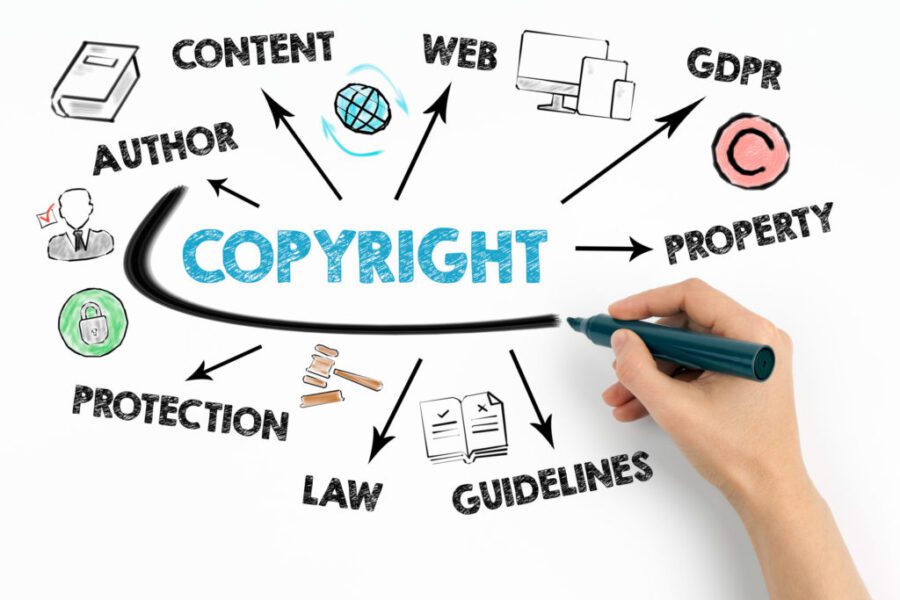
Copyright law safeguards creative works by granting exclusive rights to creators, enabling them to control usage and receive fair compensation. This research paper examines copyright protection from a legal standpoint, exploring its scope, limitations, and implications. Copyright law is a vital component of intellectual property law, designed to protect creative works and promote innovation. The protection of creative works is essential for authors, artists, and creators to reap the benefits of their labor and investment. In this research paper, we will examine how copyright law protects creative works from a legal perspective, exploring the scope of protection, limitations, and exceptions. The concept of copyright has evolved over time, from its origins in the Statute of Anne (1710) to the present day. Today, copyright law is governed by international treaties, national statutes, and judicial decisions. In India, the Copyright Act, 1957, provides the primary framework for copyright protection. This paper aims to analyze the legal framework surrounding copyright protection, highlighting key concepts, such as originality, fixation, and exclusive rights. We will also examine recent developments and challenges in copyright law, including the impact of digital technology and artificial intelligence on creative works. The research paper will be structured as follows: first, we will discuss the basics of copyright law, including the requirements for protection and the rights granted to creators. Next, we will examine the scope of protection, including the types of works protected and the limitations and exceptions to copyright. Finally, we will discuss recent developments and challenges in copyright law, including international treaties and agreements. By examining the legal framework surrounding copyright protection, this paper aims to provide a comprehensive understanding of how copyright law protects creative works and promotes innovation.
Copyright Basics
Originality: Copyright protects original literary, dramatic, musical, and artistic works.
– Fixation: Works must be fixed in a tangible medium to qualify for protection.
– Exclusive Rights: Creators have exclusive rights to reproduce, distribute, and adapt their work.
Scope of Protection– Literary Works: Novels, poems, articles, and software code.
– Dramatic Works: Plays, scripts, and choreography.
– Musical Works: Compositions, lyrics, and sound recordings.
– Artistic Works: Paintings, sculptures, photographs, and architecture.
Rights of Copyright Owners– Reproduction Right: Control over copying or reproduction.
– Distribution Right: Control over distribution of copies.
– Adaptation Right: Control over adaptations, translations, and derivative works.
– Public Performance Right: Control over public performances.
– Moral Rights: Right to attribution and integrity.
Limitations and Exceptions– Fair Use/Fair Dealing: Permitted use for criticism, review, or education.
– Public Domain: Works no longer protected by copyright.
– Compulsory Licenses: Statutory licenses for specific uses.
Infringement and Remedies- Direct Infringement: Unauthorized copying or distribution.
– Indirect Infringement: Contributory or vicarious liability.
– Remedies: Injunctions, damages, and account of profits.
International Treaties and Agreements- Berne Convention: International copyright protection.
– TRIPS Agreement: Trade-related aspects of intellectual property rights.
– WCT and WPPT: Protection of literary and artistic works, and performances and phonograms.
Emerging Issues– Digital Rights Management: Protection of digital works and DRM technologies.
– Online Infringement: Liability of intermediaries and online platforms.
– Artificial Intelligence: Copyright protection for AI-generated works.
Case laws
Ilaiyaraaja vs. Mythri Movie Makers: The Madras High Court settled a copyright infringement dispute between music director Ilaiyaraaja and the makers of “Dude” and “Good Bad Ugly”, with the producers agreeing to pay Rs 50 lakh to Ilaiyaraaja.
Open AI vs. New York Times: A federal judge ruled that Open AI must produce millions of anonymized chat logs from Chat GPT users in its copyright dispute with the New York Times.
Andrea Bartz et al v. Anthropic PBC: Authors’ lawyers in a $1.5 billion landmark copyright settlement with AI company Anthropic have asked a federal judge to award them $300 million in legal fees.
Warner Chappell Music, Inc. v. Nealy: The US Supreme Court ruled that a copyright owner possessing a timely claim for infringement is entitled to damages, no matter when the infringement occurred.
Conclusion
Copyright law plays a vital role in promoting creativity and innovation, providing creators with control over their works and ensuring fair compensation. As technology evolves, copyright law must adapt to address emerging issues and balance the rights of creators with public interests. In conclusion, copyright law plays a vital role in promoting creativity and innovation, providing creators with control over their works and ensuring fair compensation. The recent cases discussed in this paper highlight the ongoing debates and challenges in copyright law, particularly with regards to AI-generated content, fair use, and digital rights management. The Ilaiyaraaja vs. Mythri Movie Makers case emphasizes the importance of protecting copyright owners’ rights, while the Open AI vs. New York Times case raises questions about the use of AI in generating content. The Andrea Bartz et al v. Anthropic PBC case highlights the need for fair compensation for authors and creators in the digital age. The Warner Chappell Music, Inc. v. Nealy case underscores the importance of timely claims for infringement, while the Getty Images (US), Inc. v. Stability AI, Inc., et al case raises concerns about the use of AI in generating content and the potential for copyright infringement. As technology continues to evolve, copyright law must adapt to address emerging issues and balance the rights of creators with public interests. The courts and policymakers must work together to create a framework that promotes creativity, innovation, and fair compensation for creators, while also ensuring that the public has access to knowledge and information. Ultimately, the future of copyright law will depend on the ability of stakeholders to navigate the complex issues surrounding AI-generated content, digital rights management, and fair use. By striking a balance between the rights of creators and the public interest, we can ensure that copyright law continues to promote creativity and innovation in the digital age. The recent cases and developments in copyright law serve as a reminder of the importance of protecting intellectual property rights and the need for ongoing dialogue and collaboration among stakeholders to address the challenges and opportunities presented by emerging technologies.
contributed by: Riya