
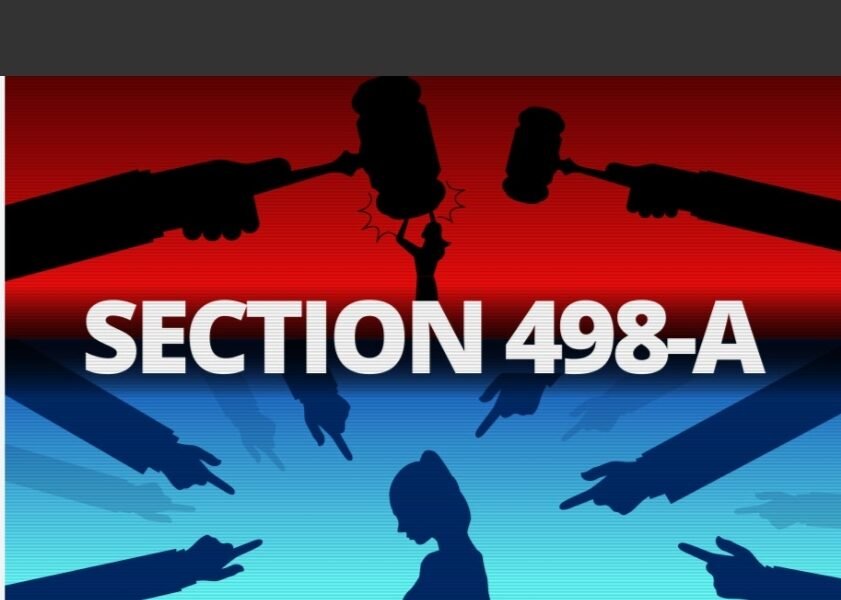
For decades, Section 498A of the Indian Penal Code (now Section 84 of the Bharatiya Nyaya Sanhita, 2023) has been a vital shield for women facing domestic cruelty and dowry harassment. However, its implementation has frequently oscillated between two extremes: ineffective protection for genuine victims and weaponization through false or exaggerated claims.
In a landmark decision in April 2025, and through subsequent clarifications in early 2026, the Supreme Court of India has issued refreshed directions aimed at sanitizing the legal process. These rulings seek to protect the innocent from “legal terrorism” while ensuring that the law’s primary objective—shielding vulnerable women—is not diluted.
1. Upholding Constitutionality: The Law is Not the Problem
The most significant recent development occurred in April 2025, when the Supreme Court dismissed a plea seeking to strike down Section 498A as unconstitutional.
- The Ruling: The Court held that “mere potential for misuse” is not a ground to invalidate a law designed for positive discrimination.
- The Logic: Hundreds of genuine cases of dowry deaths and severe cruelty still plague Indian society. Striking down the law would leave these victims defenseless. The Court reaffirmed that the law is a “classic example of positive discrimination” aimed at protecting women’s rights under Article 15 of the Constitution.
2. Safeguards Against “General and Vague” Allegations
In May 2025, the Supreme Court expressed “dismay” over the increasing tendency of complainants to rope in all relatives of the husband—including elderly parents and siblings living separately—without specific evidence.
- New Judicial Directions: Specificity Required: Allegations must include specific dates, times, and concrete incidents. Vague claims “made in thin air” will no longer suffice to sustain a criminal prosecution.
- Scrutiny of Timing: The Court noted that FIRs filed long after matrimonial disputes or divorce proceedings have begun will be viewed with a higher degree of suspicion to check for retaliatory intent.
- Absence of Evidence: A lack of corroborative evidence (such as medical records in cases of alleged physical assault) will now more frequently lead to the quashing of proceedings against distant relatives.
3. Strengthening the “Arnesh Kumar” Guidelines (2025-2026 Updates)
The Supreme Court has mandated stricter adherence to the Arnesh Kumar vs. State of Bihar guidelines to prevent “automatic arrests” which often lead to harassment of the husband’s family.
- No Automatic Arrests: Police cannot arrest individuals simply because an FIR is filed. They must satisfy the conditions under Section 41 of the CrPC (now relevant sections in BNSS), such as preventing the accused from tampering with evidence.
- The Checklist: Police officers must maintain a mandatory checklist. If they arrest, they must record the reasons in writing; if they don’t, they must record why.
- Magisterial Oversight: Magistrates are directed not to authorize detention “mechanically.” They must actively examine whether the police have complied with the arrest guidelines.
4. Protecting the “Aggrieved Giver”
A crucial clarification arrived in April 2026 regarding the Dowry Prohibition Act. While both giving and taking dowry are technically crimes, the Court protected the bride’s family.
Section 7(3) Protection: The Court ruled that victims who disclose they gave dowry under pressure cannot be prosecuted. This ensures that a woman is not discouraged from seeking justice for harassment out of fear that she (or her parents) will be charged for the initial act of giving dowry.
5. Moving Toward Conciliation
The judiciary is increasingly encouraging Mediation Centres to resolve matrimonial disputes before they escalate into long-term criminal battles. Recent orders show that if a dispute is settled amicably and a divorce is finalized, the Court is inclined to quash pending 498A proceedings to allow both parties to move on with their lives.
Conclusion
The Supreme Court’s current stance represents a sophisticated “middle path.” By tightening the rules around arrests and evidence, it aims to prevent the law from being used as a tool of harassment. Simultaneously, by protecting the givers of dowry and reaffirming the law’s necessity, it ensures that the “evil of dowry” continues to be met with a firm legal response.
Contributed By: Adv, Akshat Jain