
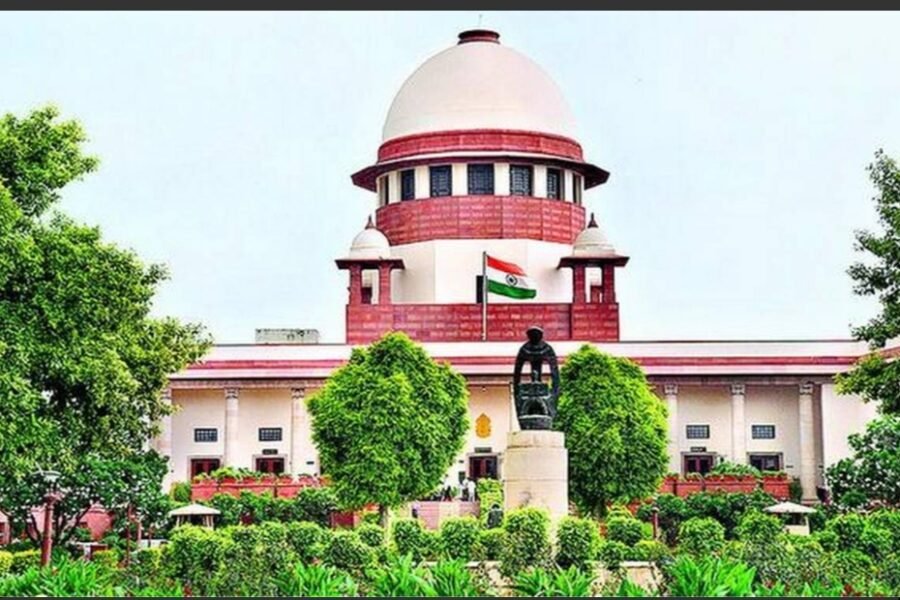
The Indian Supreme Court, in a move that underscores the sanctity of the “Right to Speedy Trial,” recently stayed criminal proceedings against a police officer in a case that had languished for 35 years without a single witness being examined.
The case, Kailash Chandra Kapri vs. State of Uttar Pradesh, serves as a stark reminder of systemic lethargy and the constitutional limits of judicial patience.
The Case Background: 1989 to 2026
The legal battle dates back to 1989, when a FIR was registered at the GRP Rambagh Police Station in Prayagraj. The petitioner, a police officer, was accused of offenses including:
- Section 147 IPC: Rioting
- Section 323 IPC: Voluntarily causing hurt
- Section 504 IPC: Intentional insult to provoke breach of peace
- Section 120 of the Railway Act: authorizes railway administrations to conduct inquiries into accidents that are not covered under Section 113 (which covers major accidents like loss of life, severe injury, or heavy damage).
A Trial That Never Started
Despite three and a half decades passing since the incident, the trial remained in a state of suspended animation. Of the five-original accused:
- Two died pending trial.
- Two were acquitted because the prosecution could not produce any witnesses.
- The Petitioner remained the sole individual still facing the threat of prosecution.
The Supreme Court’s Observation
A Bench comprising Justice J.B. Pardiwala and Justice Vijay Bishnoi expressed serious concern over the “extraordinary delay.” The Court noted that forcing an individual to face a trial where no evidence has been led for 35 years is an affront to justice.
“In the facts and circumstances of this case and more particularly, having regard to the fact that almost 35 years have lapsed, we are inclined to quash the proceedings only on this ground alone.” — The Bench
While the Court has stayed the trial and issued a notice to the State of Uttar Pradesh to hear their side before a final quashing order, the intent is clear: delay alone can be a sufficient ground for quashing.
Constitutional Significance: Article 21
This case reinforces the landmark jurisprudence surrounding Article 21 of the Constitution, which guarantees the Right to Life and Personal Liberty.
The “Speedy Trial” Doctrine
The Supreme Court has consistently held that the right to a speedy trial is an integral part of Article 21. Key precedents include:
- Hussainara Khatoon v. Home Secretary (1979): Established that a procedure which does not ensure a reasonably quick trial is not “reasonable, fair, or just.”
- A.R. Antulay v. R.S. Nayak (1992): Laid down guidelines for balancing the rights of the accused against the nature of the crime and the reasons for delay.
- P. Ramachandra Rao v. State of Karnataka (2002): While refusing to set a hard time limit (like a 2-year or 5-year rule), the Court affirmed that “oppressive and unwarranted” delays must lead to the termination of proceedings.
Why Delay Justifies Quashing
The Court’s rationale for proposing to quash the trial rests on several legal pillars:
- Presumption of Innocence: Keeping a sword of Damocles over an accused for 35 years causes mental agony and social stigma that can outweigh the potential punishment.
- Loss of Evidence: After 35 years, memories fade, documents are lost, and witnesses disappear. A fair trial becomes an impossibility.
- Systemic Failure: The state’s failure to produce witnesses is not the fault of the accused. Continuing the trial would be an abuse of the process of law.
Conclusion
The Supreme Court’s stance in this case is a firm message to the lower judiciary and the prosecution: Justice must not only be done but must be done within a timeframe that makes it meaningful. By proposing to quash a 35-year-old trial “on the ground of delay alone,” the apex court is reaffirming that the state cannot be allowed to keep a citizen in legal limbo indefinitely.
The final hearing, scheduled for April 29, 2026, will likely set a definitive precedent for how courts should handle ancient cases where the prosecution has effectively collapsed due to its own inertia.
Contributed By: Adv, Akshat Jain