Introduction
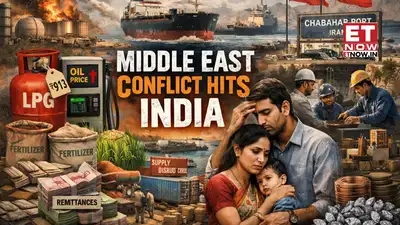
The Middle East has long been one of the most strategically important regions in global politics because of its vast energy resources, trade routes, and geopolitical rivalries. The recent escalation involving Israel, Iran, and the United States has intensified instability across West Asia. Although India is geographically distant from the conflict zone, its economic and strategic connections with the region make it highly vulnerable to such crises. India relies heavily on Middle Eastern energy supplies, maintains strong trade relations with Gulf countries, and has millions of citizens working in the region. Consequently, the ongoing conflict has significant implications for India’s economy, energy security, foreign policy.
Energy Security and Rising Oil Prices
One of the most immediate consequences of the Middle East war for India is the surge in global oil prices. India imports more than 80–85 percent of its crude oil requirements, with a large share coming from Gulf countries. As tensions escalate and shipping routes face disruption, energy supplies become uncertain and prices increase. Strait of Hormuz, one of the world’s most critical energy chokepoints, carries a large share of global oil and gas shipments. Any disruption in this corridor can significantly affect India’s oil imports and raise energy costs.
Higher crude oil prices increase India’s import bill and contribute to inflation. Rising fuel prices affect transportation, manufacturing, and agriculture, which ultimately increases the cost of living for consumers. Analysts warn that prolonged conflict could also weaken the Indian rupee and widen the country’s current account deficit, placing additional pressure on economic stability.
Trade and Supply Chain Disruptions
The Middle East war also affects global trade routes that are crucial for India’s international commerce. Many of India’s exports and imports pass through shipping routes connected to the Gulf region. Disruptions in maritime transport, higher insurance premiums, and longer shipping routes increase logistics costs and delay trade flows. As a result, industries that rely on imported energy or raw materials face production challenges.
Recent reports indicate that supply chain disruptions and fuel shortages have already affected Indian industries, forcing some companies to reduce production capacity due to difficulties in securing essential energy supplies.
Additionally, Gulf countries are important trading partners for India. If economic activity in these countries slows due to conflict or sanctions, Indian exports could decline. Such disruptions highlight how closely India’s economic performance is linked to stability in the Middle East.
Impact on the Indian Diaspora and Remittances
Another major concern for India is the safety and economic security of its large diaspora in the Gulf region. Nearly nine to ten million Indians live and work in Middle Eastern countries, particularly in nations such as Saudi Arabia, United Arab Emirates, Qatar, and Kuwait. These workers send significant financial remittances back to India, making the country the world’s largest recipient of remittances.
If the conflict intensifies and disrupts economic activity in Gulf countries, these remittance flows could decline. Experts warn that prolonged war could put tens of billions of dollars in annual remittances at risk, affecting millions of Indian families who depend on these funds for their livelihoods.
Remittances also play an important role in stabilizing India’s balance of payments by offsetting trade deficits. Therefore, any decline in these inflows could have broader economic consequences.
Financial Market and Economic Impact
The conflict has also created volatility in financial markets. Rising oil prices and geopolitical uncertainty have triggered fluctuations in global investment flows. In India, stock markets have experienced corrections as investors react cautiously to the possibility of prolonged instability in energy markets and international trade.
Furthermore, rising energy costs and supply disruptions may slow industrial growth and increase production costs for businesses. Industries that depend heavily on energy, such as manufacturing and transport, are particularly vulnerable to such shocks.
Diplomatic and Strategic Challenges
The Middle East conflict also presents a complex diplomatic challenge for India. The country maintains strong relations with Israel while also having close economic and political ties with several Arab nations and Iran. This requires India to maintain a careful diplomatic balance.
India has generally called for dialogue and de-escalation rather than openly supporting any one side. However, analysts argue that the expanding conflict has increased political pressure on India because of its strategic partnerships and economic interests in the region.
Maintaining strategic autonomy while protecting national interests remains a key challenge for Indian foreign policy.
Conclusion
The ongoing war in the Middle East demonstrates how regional conflicts can have far-reaching global consequences. For India, the crisis poses serious economic, political, and strategic challenges. Rising oil prices, trade disruptions, potential decline in remittances, and financial market volatility highlight India’s deep dependence on the stability of the Gulf region. At the same time, the conflict places India in a delicate diplomatic position as it attempts to maintain balanced relations with multiple stakeholders.
In the long term, India may need to reduce its vulnerability by diversifying energy sources, strengthening strategic reserves, expanding renewable energy, and building more resilient trade networks. Such measures would help ensure that geopolitical conflicts in distant regions have a less severe impact on the Indian economy and its global role.