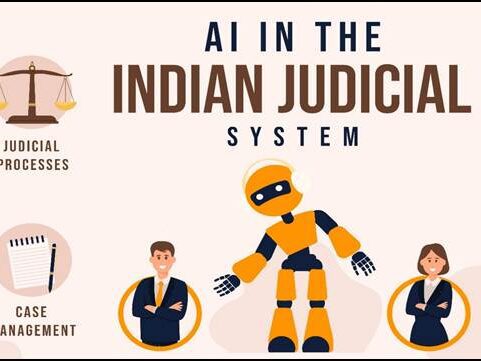
Artificial Intelligence (AI) is rapidly reshaping the administration of criminal justice across the world. From predictive policing and forensic analysis to judicial research and prison management, AI is increasingly being integrated into various stages of the justice system. Its growing presence promises efficiency, accuracy, and data-driven decision-making. However, the use of AI in such a sensitive domain also raises serious legal, ethical, and constitutional concerns. Criminal justice is not merely about crime control; it is fundamentally about protecting liberty, ensuring fairness, and upholding due process. Therefore, the introduction of AI into this system must be carefully examined to ensure that technological advancement does not come at the cost of justice.
One of the primary areas where AI is being used is law enforcement. Predictive policing tools analyze historical crime data, patterns, and geographical trends to forecast potential criminal activity. In theory, this allows police authorities to allocate resources more efficiently and prevent crimes before they occur. While this approach appears innovative, it raises significant concerns about over-surveillance and profiling. Crime data often reflects historical policing biases, meaning that communities previously subjected to excessive policing may continue to be disproportionately targeted by AI-driven systems. This creates a cycle where technology reinforces existing inequalities rather than correcting them, thereby challenging the constitutional principles of equality and non-discrimination.
AI is also playing an important role in criminal investigations, particularly through facial recognition technology, digital evidence analysis, and automated surveillance systems. These technologies enhance investigative efficiency by processing vast amounts of data in a short time. For instance, AI can analyze CCTV footage, detect suspicious patterns, and identify suspects more quickly than traditional methods. However, the accuracy and reliability of such technologies remain contested. Facial recognition systems have been criticized for higher error rates in identifying minorities and women, leading to wrongful identification and potential miscarriages of justice. In criminal law, where the stakes involve personal liberty and reputation, even minor technological errors can have severe consequences.
Another significant application of AI lies in risk assessment tools used during bail, sentencing, and parole decisions. These tools claim to evaluate the likelihood of reoffending or absconding by analyzing socio-economic and behavioral data. While they aim to promote consistency and reduce judicial subjectivity, they also risk undermining individualized justice. Criminal liability should be determined based on evidence and personal circumstances, not predictive statistical models. Over-reliance on algorithmic risk scores may result in decisions that indirectly penalize poverty, unemployment, or social disadvantage, thereby eroding the principle of fairness in criminal adjudication.
The integration of AI into judicial processes is another emerging development. Courts are increasingly using AI-powered software for legal research, case management, and document analysis to address the growing backlog of cases. Such tools can significantly reduce delays and improve administrative efficiency. However, judicial decision-making involves interpretation, discretion, and moral reasoning elements that cannot be fully replicated by machines. Justice is not a mechanical process; it requires human empathy, contextual understanding, and ethical judgment. If AI tools begin to influence judicial reasoning excessively, there is a risk that justice may become overly technocratic and detached from human realities.
One of the most pressing concerns surrounding AI in criminal justice is algorithmic bias. AI systems are trained on datasets that may contain historical prejudices, socio-economic disparities, and institutional biases. As a result, the outcomes generated by these systems may unintentionally perpetuate discrimination. Unlike human bias, which can be identified and challenged, algorithmic bias is often hidden within complex computational models. This lack of transparency makes it difficult for accused persons and their legal representatives to challenge AI-generated conclusions, thereby affecting the right to a fair trial and the principle of natural justice.
Transparency and accountability are equally critical issues. Many AI systems operate as “black boxes,” meaning their internal reasoning processes are not easily explainable even to experts. In criminal proceedings, where evidence must be scrutinized and contested, reliance on opaque technology raises serious due process concerns. If an AI-assisted decision leads to wrongful arrest or unjust sentencing, determining accountability becomes difficult. Questions arise as to whether responsibility lies with the software developer, the law enforcement agency, or the judicial authority relying on the technology. The absence of a clear legal framework governing AI accountability creates a regulatory gap in modern criminal justice systems.
Despite these challenges, AI also offers transformative potential if used responsibly. AI-driven forensic tools can enhance the accuracy of evidence analysis, reducing the chances of wrongful convictions. Automated systems can assist in reviewing large volumes of legal documents, identifying precedents, and streamlining court procedures. Additionally, AI can improve access to justice by supporting legal aid services, especially in countries with overburdened judicial systems. By assisting rather than replacing human decision-makers, AI can contribute to a more efficient and accessible justice delivery mechanism.
However, the ethical deployment of AI in criminal justice requires strong safeguards. First, transparency in algorithmic functioning must be ensured so that decisions can be examined and challenged in court. Second, regular bias audits should be conducted to prevent discriminatory outcomes. Third, comprehensive legislation is necessary to regulate the use of AI in law enforcement and judicial processes. Most importantly, the principle of human oversight must remain central. AI should serve as an assistive tool that enhances human judgment rather than replacing it.
In conclusion, the relationship between AI and criminal justice is complex and evolving. While AI has the potential to modernize the justice system by improving efficiency, accuracy, and accessibility, it simultaneously poses risks to fairness, privacy, and due process. Criminal justice systems must strike a careful balance between technological innovation and constitutional values. The ultimate goal should not be to create an automated justice system, but a technologically assisted one that remains firmly rooted in human dignity, accountability, and the rule of law. Only through cautious regulation, ethical implementation, and continuous oversight can AI become a tool that strengthens justice rather than undermines it.