
Introduction
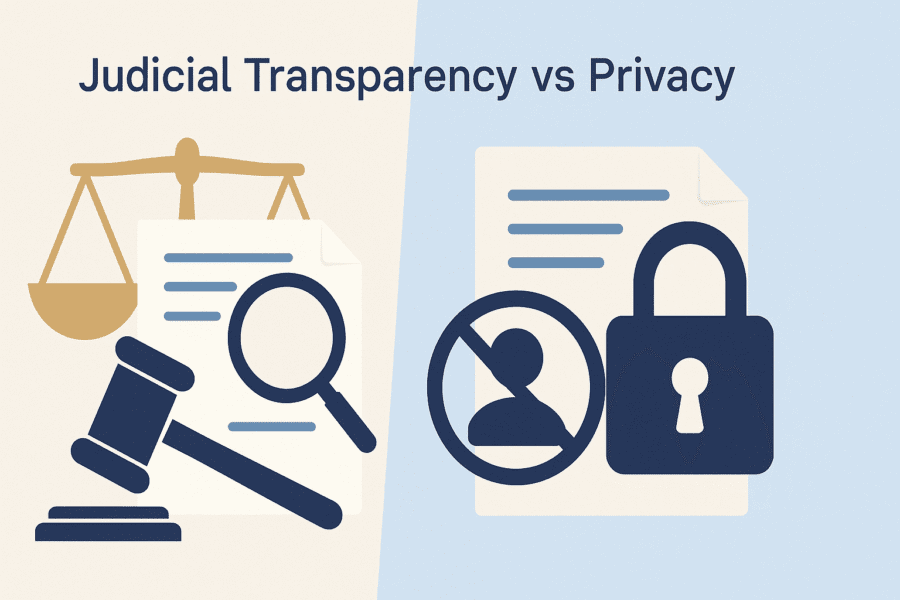
India is currently witnessing a significant constitutional debate over the balance between privacy and transparency, triggered by challenges to the Digital Personal Data Protection framework and its impact on the Right to Information regime. In March 2026, multiple petitions have been filed before the Supreme Court questioning amendments that restrict disclosure of “personal information” under the Right to Information Act. These developments have brought into focus a fundamental question: can the State expand privacy protections in a manner that dilutes transparency and public accountability? The issue is not merely statutory—it strikes at the core of constitutional governance, where the right to privacy and the right to information coexist as competing yet complementary rights.
The Legal Background: RTI vs Data Protection
The Right to Information Act, 2005 was enacted to promote transparency and accountability in governance, embodying the principle of “maximum disclosure.” Over the years, it has been instrumental in exposing corruption and ensuring public scrutiny of government actions. However, with the advent of the Digital Personal Data Protection framework, the legal landscape has undergone a shift. The recent amendments effectively exclude access to “personal information,” even in contexts where such information may be necessary for public interest disclosures. This creates a direct conflict between two important legal regimes—one promoting openness and the other prioritizing privacy.
The Constitutional Conflict
The Supreme Court in Justice K.S. Puttaswamy v. Union of India recognized the right to privacy as a fundamental right under Article 21. At the same time, the right to information has been judicially interpreted as part of the freedom of speech and expression under Article 19(1)(a). The present controversy lies in reconciling these two rights. While privacy protects individual autonomy and dignity, transparency ensures accountability of public institutions. A legal framework that disproportionately favors one at the expense of the other risks disturbing this constitutional balance.
Concerns Raised by the Current Amendments
Critics of the recent amendments argue that the expanded definition of “personal information” is vague and overbroad, potentially shielding public officials from scrutiny. Journalists and transparency activists have expressed concerns that this change could hinder investigative reporting and limit access to information that was previously available under the RTI framework. Furthermore, the absence of clear public interest exceptions raises the possibility that crucial information regarding governance, public spending, and administrative decisions may be withheld under the guise of privacy.
Impact on Investigative Journalism and Public Accountability
The implications of this legal shift extend beyond individual rights and into the functioning of democracy itself. The RTI Act has historically empowered citizens and journalists to question authority and demand accountability. By restricting access to information, the amendments risk creating a chilling effect on investigative journalism. This is particularly concerning in a democratic system where transparency serves as a check on the misuse of power. If access to information is curtailed, the ability of citizens to hold the government accountable may be significantly weakened.
The State’s Justification
The government has defended the amendments on the ground that they are necessary to protect individual privacy in an increasingly digital ecosystem. With the rise of data collection and processing, the risk of misuse of personal information has increased, necessitating stronger legal safeguards. The State argues that the amendments do not eliminate transparency but merely introduce reasonable restrictions to protect sensitive personal data. However, the effectiveness of this justification depends on whether adequate safeguards exist to prevent misuse of these restrictions.
Judicial Review and the Road Ahead
The challenge before the Supreme Court is to strike a balance between competing constitutional values. The Court will likely examine whether the restrictions imposed by the amendments satisfy the test of proportionality, which requires that any limitation on fundamental rights must be necessary, reasonable, and proportionate to the objective sought to be achieved. The outcome of this litigation will have far-reaching implications for the future of transparency, privacy, and governance in India.
Broader Implications for Constitutional Governance
This controversy is indicative of a larger trend where technological advancements are reshaping the contours of legal rights. As the State acquires greater capacity to collect and regulate data, the need for robust legal safeguards becomes more pressing. The challenge lies in ensuring that the expansion of privacy protections does not come at the cost of democratic accountability. A balanced approach must recognize that privacy and transparency are not mutually exclusive but must coexist within a framework that upholds constitutional values.
Conclusion
The ongoing constitutional challenge to India’s data protection regime highlights a critical tension at the heart of modern governance. While the protection of personal data is essential in a digital age, it cannot be used as a shield to undermine transparency and accountability. The resolution of this conflict will shape the future of both privacy and the right to information in India. Ultimately, the legitimacy of any legal framework will depend on its ability to balance individual rights with the broader public interest, ensuring that neither privacy nor transparency is sacrificed at the altar of the other.
CONTRIBUTED BY: ANUJ BIJARNIYA