
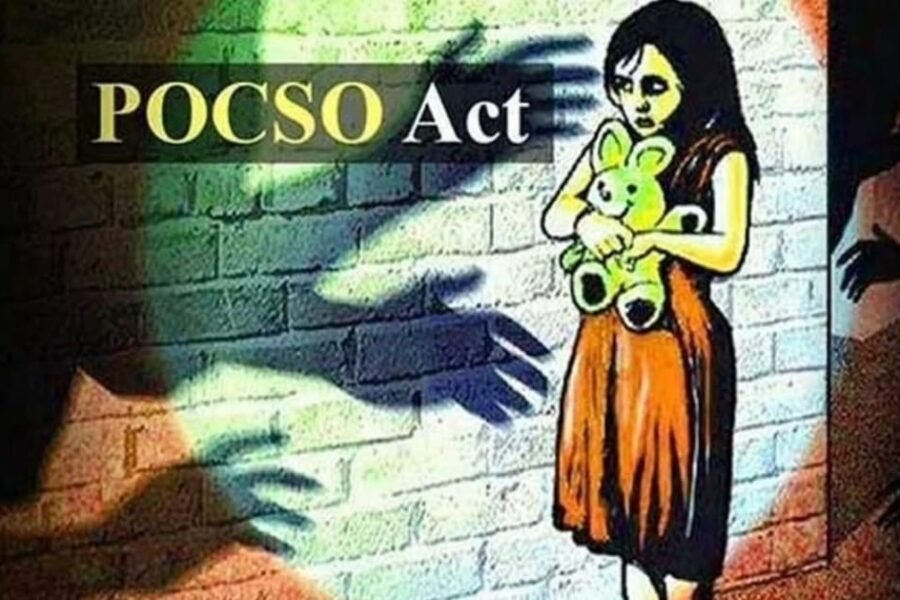
The Protection of Children from Sexual Offences (POCSO) Act, 2012, stands as one of India’s most progressive and stringent laws aimed at shielding minors from sexual abuse, exploitation, and pornography. Enacted in the wake of rising concerns over child sexual abuse cases, the Act defines a “child” as any person below 18 years of age and adopts a gender-neutral, victim-centric approach. It establishes special courts for speedy trials, mandates child-friendly procedures during investigation and recording of evidence, and imposes severe punishments ranging from rigorous imprisonment to life term or even death in aggravated cases.
Core Provisions of the POCSO Act
The Act classifies offences into distinct categories:
- Penetrative and Aggravated Penetrative Sexual Assault (Sections 3–6): These include any form of penetration or aggravated acts involving children, with punishments extending up to life imprisonment.
- Sexual Assault (Sections 7–8): Non-penetrative sexual acts with sexual intent, punishable by 3–5 years imprisonment and fine.
- Sexual Harassment (Sections 11–12): Acts like stalking, showing pornography, or making sexual remarks, attracting up to 3 years imprisonment.
- Use of Child for Pornography (Section 13): Producing, distributing, or storing child pornography, with stringent penalties.
Key safeguards include mandatory reporting of offences (failure to report is punishable), protection of the child’s identity, presumption of certain facts in favour of the prosecution in specific scenarios, and the establishment of Special Courts to ensure trials are completed within a year. Age determination follows the procedure under Section 94 of the Juvenile Justice (Care and Protection of Children) Act, 2015 (JJ Act), prioritising school certificates or birth records, with medical tests as a last resort. Consent is irrelevant; any sexual act with a child below 18 is an offence.
The law’s intent is clear: to create a robust deterrent against the sexual exploitation of children while prioritising their dignity and psychological well-being throughout the justice process.
The Growing Challenge: Misuse in Consensual Adolescent Relationships
While POCSO has undeniably strengthened child protection, its rigid application—particularly the fixed age of consent at 18—has sparked debate. In recent years, courts across India have increasingly noted instances where the Act is allegedly invoked not to protect victims of abuse but to settle family scores or oppose romantic relationships between adolescents. Families disapproving of inter-caste, inter-religion, or “inappropriate” teenage romances sometimes file complaints framing consensual relationships as abduction or sexual assault, leading to young boys (and occasionally girls) facing prolonged incarceration, social stigma, and ruined futures.
This “misuse” creates a troubling paradox: a law designed to protect the vulnerable is seen by some as criminalizing normal adolescent exploration and autonomy, especially when both parties are close in age and the relationship is voluntary.
The Turning Point: State of Uttar Pradesh v. Anurudh (2026)
On 9 January 2026, the Supreme Court of India delivered a significant judgment in The State of Uttar Pradesh v. Anurudh & Anr. (2026 INSC 47 / 2026 LiveLaw (SC) 29) that directly addresses these tensions. The case originated from a FIR in Uttar Pradesh alleging the abduction of a 12-year-old girl and offences under Sections 363, 366 IPC and Sections 7 & 8 of the POCSO Act. The accused, Anurudh, was denied bail by the trial court. The Allahabad High Court, however, granted interim and final bail after noting inconsistencies in the victim’s age (school records vs. medical opinion suggesting she was above 18), her statements indicating consensual intimacy, and lack of corroborative evidence of force. Crucially, the High Court went further: it issued sweeping directions applicable to all POCSO cases in Uttar Pradesh. These mandated medical age determination tests at the very start of investigation, required production of such reports before bail courts, and directed bail judges to give primacy to medical evidence over documentary proof in certain cases.
The State of Uttar Pradesh challenged these directions before the Supreme Court. A single-judge bench led by Justice Sanjay Karol allowed the appeal and set aside the High Court’s general directions on two primary grounds:
- Jurisdictional Overreach in Bail Matters: Under Section 439 of the CrPC, bail courts are limited to assessing prima facie case, gravity of offence, risk of tampering, and flight risk. They cannot conduct “mini-trials,” order mandatory medical tests across the state, or issue policy-level directions to investigating agencies. Age determination is a matter for trial, not bail. Bail courts may form a tentative view based on documents under Section 94 JJ Act but cannot adjudicate their veracity or mandate medical ossification tests routinely.
- Statutory Procedure for Age Determination: The Court reiterated the hierarchy in Section 94 JJ Act—documentary proof first, medical test only if documents are unavailable or doubtful. Mandating medical exams in every POCSO case violates legislative intent and risks violating the dignity of victims.
The Supreme Court’s Forward-Looking Observations on Misuse
Beyond the technical rulings on bail and procedure, the judgment is remarkable for its candid acknowledgment of systemic issues. The Supreme Court took “judicial notice” of the rising misuse of POCSO in cases involving consensual adolescent relationships. It referenced observations from various high courts noting that families increasingly weaponize the Act against young couples, leading to young persons languishing in jail for what are essentially romantic entanglements. Drawing parallels with the misuse of Section 498A IPC and the Dowry Prohibition Act, the court emphasized the need for societal awakening, ethical vigilance by the legal fraternity, and legislative reform.
Most significantly, the Supreme Court directed that a copy of the judgment be sent to the Secretary, Ministry of Law and Justice, Government of India, to “consider initiation of steps as may be possible to curb this menace, inter alia, the introduction of a Romeo–Juliet clause exempting genuine adolescent relationships from the stronghold of this law.” This “close-in-age” exception—already present in several jurisdictions worldwide—would provide a narrow defense where the age gap is minimal, consent is genuine, and there is no exploitation, thereby preventing the criminalization of normal teenage romance while retaining strong protection for actual child victims.
Implications and the Road Ahead
The Anurudh judgment strikes a careful balance. It reinforces that age determination remains a trial-stage exercise, prevents bail courts from overstepping into investigative or policy domains, and upholds the statutory safeguards of POCSO. At the same time, it signals to lawmakers that the Act, while well-intentioned, requires nuanced reform to address ground realities without diluting its core protective mandate.
For law enforcement and the judiciary, the verdict serves as a reminder: every POCSO case must be evaluated on its individual facts, with sensitivity to context, consent (where relevant for age disputes), and the possibility of motivated complaints. For society and legislators, it reignites the debate on the age of consent and adolescent autonomy in 21st-century India.
As India grapples with evolving social norms around relationships, education, and digital influences, the State of Uttar Pradesh v. Anurudh (2026) judgment may well become a catalyst for thoughtful amendments. A carefully drafted Romeo-Juliet clause, coupled with better awareness programs, stricter penalties for false complaints, and continued emphasis on child protection, could help the POCSO Act evolve into a more precise instrument of justice—one that truly shields the innocent without inadvertently punishing love. Ultimately, protecting children remains non-negotiable. But justice demands that the law adapt to prevent its own misuse. The Supreme Court has shown the way; it is now for Parliament and society to walk it.
Contributed By: Akshat Jain, Advocate