
Introduction
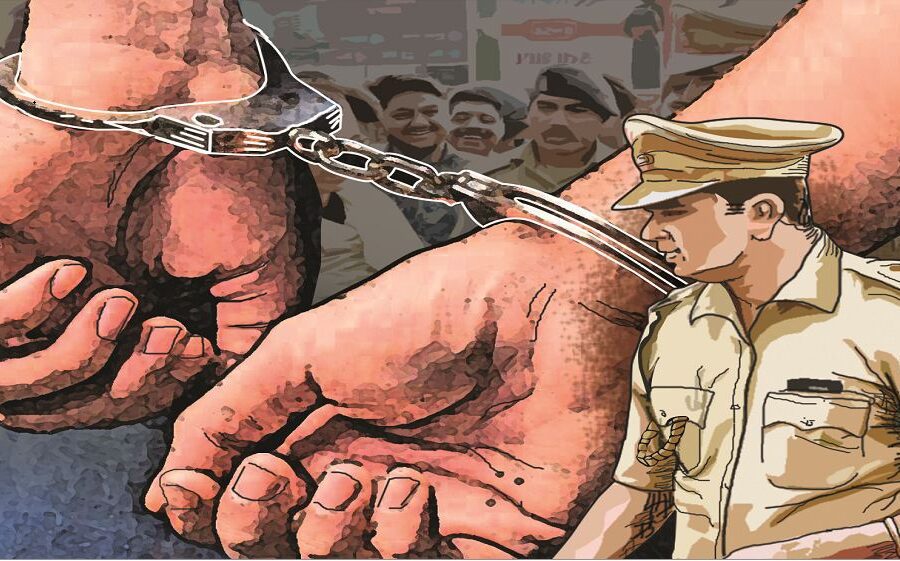
Personal liberty lies at the core of India’s constitutional democracy. Article 21 of the Constitution guarantees that no person shall be deprived of life or personal liberty except according to procedure established by law. Over time, judicial interpretation has transformed this provision into a powerful safeguard against arbitrary state action. At the same time, the Constitution itself authorizes preventive detention. Unlike ordinary criminal detention, which follows investigation, trial, and conviction, preventive detention permits the State to detain an individual based on the apprehension of future conduct. The person is not punished for what has been proven but restrained for what may potentially occur. This forward-looking character makes preventive detention one of the most complex and debated features of Indian constitutional law. In contemporary India, where issues of public order and national security frequently intersect with fundamental rights, preventive detention continues to raise an important constitutional question: does it function within carefully guarded safeguards, or does it risk expanding executive authority beyond intended limits?
Constitutional Framework Under Article 22
Article 22 of the Constitution addresses arrest and detention. Clauses (1) and (2) provide important procedural protections. An arrested person must be practitioner androunds of arrest, allowed to consult a legal practitioner, and produced before a magistrate within twenty-four hours. Preventive detention, however, is treated differently. Article 22(3) excludes it from the immediate protections available in ordinary arrests. Instead, clauses (4) to (7) establish a separate system of safeguards. A detention order must be reviewed by an Advisory Board, the detainee must be informed of the grounds of detention, and the period of detention is subject to statutory limits. Parliament is empowered to prescribe further procedural safeguards. This constitutional arrangement demonstrates that preventive detention is not an executive innovation outside constitutional control; it is expressly recognised within the constitutional text but surrounded by procedural mechanisms intended to prevent arbitrary use.
Early Judicial Approach
The Supreme Court first examined preventive detention in A.K. Gopalan v. State of Madras. In this decision, the Court adopted a narrow interpretation of Article 21. It held that once a law prescribing a procedure was validly enacted, courts would not question the fairness or reasonableness of that procedure. Fundamental rights were interpreted separately rather than as interconnected guarantees. This approach limited judicial scrutiny in detention cases during the early constitutional years, and preventive detention statutes were largely upheld so long as they complied with formal legislative requirements.
Expansion of Liberty Jurisprudence
The position changed significantly in Maneka Gandhi v. Union of India. The Supreme Court held that the “procedure established by law” under Article 21 must be just, fair, and reasonable. The Court also clarified that Articles 14, 19, and 21 are interrelated and must be read together. This marked a decisive shift, as laws affecting personal liberty, including preventive detention statutes, became subject to broader constitutional scrutiny. Later, in Justice K.S. Puttaswamy v. Union of India, the Court recognized privacy and dignity as intrinsic components of personal liberty. The judgment emphasized that any state action restricting fundamental rights must satisfy the tests of legality, necessity, and proportionality. Although preventive detention laws were not invalidated, the constitutional environment in which they operate became more rights-sensitive and structured around fairness.
Preventive Detention in Practice
Preventive detention in India operates through statutes such as the National Security Act, 1980 and similar state laws. These statutes empower executive authorities to detain individuals based on their “subjective satisfaction” that such detention is necessary to prevent activities prejudicial to public order or national security. The doctrine of subjective satisfaction limits the scope of judicial review. Courts generally do not reassess the sufficiency of evidence as they would in a criminal trial. Instead, they examine whether relevant material existed before the authority, whether there was proper application of mind, whether procedural safeguards were complied with, and whether the grounds of detention were clearly communicated. This limited review reflects judicial restraint in matters involving security concerns while ensuring that executive power does not operate entirely unchecked. In Rekha v. State of Tamil Nadu, the Supreme Court clarified that preventive detention should not be invoked when ordinary criminal law is sufficient to deal with the situation. The Court emphasized that detention without trial is an exceptional measure and must not replace regular prosecution.
Proportionality and Constitutional Balance
Modern constitutional jurisprudence increasingly applies the principle of proportionality. Even where preventive detention is legally authorised, its exercise must not be excessive or unnecessary. Since preventive detention restricts liberty without a formal finding of guilt, its use must be justified by compelling circumstances. Where less restrictive alternatives are available, reliance on preventive detention may raise constitutional concerns. Proportionality therefore operates as a guiding principle in maintaining the balance between security needs and individual freedom.
Contemporary Relevance
Preventive detention continues to be invoked in matters relating to public order, habitual offenders, and national security concerns. At the same time, courts frequently intervene when detention orders suffer from procedural defects or lack proper reasoning. The constitutional framework does not treat preventive detention as inherently invalid. Instead, it regulates its exercise through procedural safeguards and judicial oversight. The ongoing debate lies not in its existence, but in the manner and extent of its application.
Conclusion
Preventive detention occupies a unique and sensitive position within India’s constitutional scheme. It represents an exception to the ordinary criminal process, justified by considerations of public order and national security. However, it is not beyond constitutional discipline. Judicial developments under Article 21 have strengthened safeguards surrounding personal liberty, ensuring that detention laws operate within standards of fairness, reasonableness, and proportionality. The continued legitimacy of preventive detention depends upon its careful and restrained application. The constitutional challenge remains enduring: preserving public security while upholding the foundational commitment to individual liberty.
CONTRIBUTED BY: ANUJ BIJARNIYA