
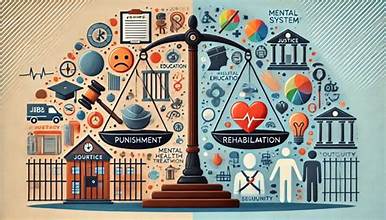
For centuries, many criminal justice systems around the world have been built on a punitive model a framework focused primarily on punishment. In this system, offenders are penalized through imprisonment, fines, or other sanctions with the belief that punishment deters crime and delivers justice to society. However, in recent decades, policymakers, criminologists, and human rights advocates have increasingly argued for a shift toward a rehabilitative legal framework, one that focuses on reforming offenders and reintegrating them into society. This transition reflects a growing understanding that justice should not only punish wrongdoing but also prevent future crime by addressing its underlying causes.
Understanding the Punitive Approach
A punitive legal system emphasizes retribution and deterrence. When a person commits a crime, the law imposes a penalty proportional to the offense. The underlying idea is that harsh consequences will discourage both the offender and others in society from committing similar crimes.
While this approach can provide a sense of accountability and justice, it has several limitations. Prisons in many countries are overcrowded, under-resourced, and often fail to rehabilitate inmates. Instead of correcting behavior, incarceration can sometimes reinforce criminal habits by exposing offenders to hardened criminals and limited opportunities for personal development. As a result, many individuals released from prison struggle to reintegrate into society, leading to high rates of recidivism, or repeat offending.
The Philosophy of Rehabilitation
A rehabilitative legal framework shifts the focus from punishment to reform and reintegration. Rather than asking only how offenders should be punished, it asks how they can be transformed into law abiding members of society.
Rehabilitation seeks to address the root causes of criminal behavior, which may include poverty, lack of education, substance abuse, mental health issues, or social marginalization. By providing counseling, education, vocational training, and psychological support, the justice system aims to help offenders rebuild their lives and reduce the likelihood of reoffending.
Programs such as restorative justice, community service, probation, and skill development initiatives reflect this philosophy. In restorative justice models, offenders are encouraged to understand the harm they have caused and, in some cases, directly engage with victims to repair that harm. This process promotes accountability while also fostering empathy and reconciliation.
Benefits of a Rehabilitative Framework
One of the most significant advantages of a rehabilitative approach is its potential to reduce repeat crime. When offenders gain education, employment skills, and psychological support, they are better equipped to live productive lives after release.
Additionally, rehabilitation can be more economically efficient than prolonged incarceration. Maintaining prisons and managing large inmate populations requires significant public resources. Investment in rehabilitation programs, though initially costly, often saves money in the long term by lowering recidivism rates.
Another benefit is the promotion of human dignity and social justice. A rehabilitative system recognizes that many offenders come from disadvantaged backgrounds and that social systems often play a role in criminal behavior. By focusing on reform rather than simply punishment, the legal system demonstrates a commitment to fairness, compassion, and long-term societal well being.
Challenges in Implementing Rehabilitation
Despite its advantages, transitioning to a rehabilitative legal framework is not without challenges. Public opinion often favors tough punishment, particularly in cases involving serious crimes. Governments may hesitate to adopt policies perceived as “soft on crime.”
Furthermore, effective rehabilitation requires well designed programs, trained professionals, and adequate funding. Without these elements, rehabilitation initiatives may fail to achieve meaningful results.
Another challenge lies in balancing rehabilitation with the need for justice and public safety. In cases involving violent crimes, society still expects strong accountability measures. Therefore, most modern justice systems attempt to combine punishment with rehabilitation rather than replacing punishment entirely.
The Way Forward
The future of criminal justice likely lies in a balanced approach that integrates both accountability and rehabilitation. Prisons can evolve into centers for reform where inmates receive education, mental health treatment, and vocational training. Alternatives to incarceration such as community service, restorative justice programs, and supervised probation can be used for non violent offenders.
Governments, civil society organizations, and communities must work together to support reintegration efforts, reduce stigma against former offenders, and create opportunities for employment and social inclusion.
Conclusion
Moving toward a rehabilitative rather than purely punitive legal framework represents a progressive shift in the philosophy of justice. By focusing on reform, addressing the root causes of crime, and promoting reintegration, such a system not only benefits offenders but also strengthens society as a whole. While punishment may satisfy the immediate demand for justice, rehabilitation offers a more sustainable path toward reducing crime, restoring lives, and building safer communities.
Contributed By
Advocate Seema Choudhary