
Introduction
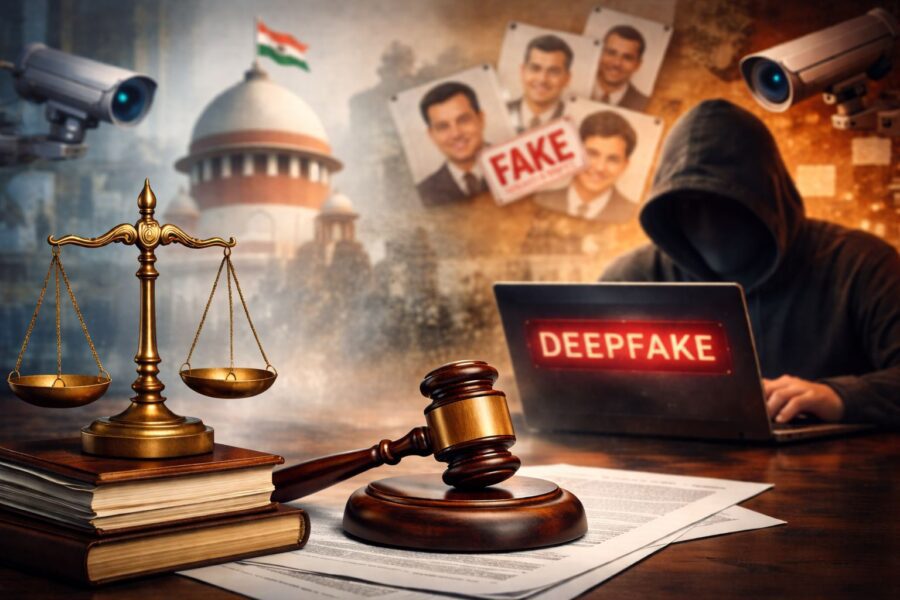
The rapid advancement of artificial intelligence (AI) has significantly transformed the digital world, bringing numerous innovations that were once unimaginable. One of the most prominent developments in this field is deepfake technology, which relies on artificial intelligence and deep learning techniques to create highly realistic yet fabricated images, videos, and audio recordings. Although such technology can be used for legitimate purposes such as filmmaking, entertainment, and education, it also presents serious risks when misused. In recent years, deepfake content has increasingly appeared on various social media platforms, often targeting individuals, celebrities, and public figures.
Across the world, including India, the misuse of deepfake technology has raised serious concerns relating to privacy violations, misinformation, identity theft, and reputational harm. The ability to manipulate digital content with remarkable precision has created new legal challenges that traditional legal frameworks struggle to address. As a result, the legal system must confront complex questions regarding accountability, regulation, and the protection of individual rights in the rapidly evolving digital environment.
Deepfakes are particularly alarming because they are extremely difficult to detect and can easily mislead viewers. With the growing availability of artificial intelligence tools, even individuals with minimal technical expertise can generate convincing manipulated media. This development has significant implications for the protection of individual rights, the credibility of digital information, and the functioning of democratic institutions. Therefore, it has become increasingly important to examine the legal framework governing deepfakes and to identify the regulatory gaps that exist within it.
Understanding Deepfake Technology and Its Growing Misuse
Deepfake technology is based on advanced artificial intelligence and deep learning systems, particularly a method known as Generative Adversarial Networks (GANs). These systems operate by analysing large datasets of images, videos, or voice recordings of a person. Using this information, the AI algorithm generates synthetic media that closely resembles the original individual. As a result, it becomes possible to create videos in which people appear to say or perform actions that they never actually did.
The rise of this technology gained global attention when manipulated videos of well-known public figures began circulating online. Such videos demonstrated how convincingly AI could fabricate reality, making it difficult for viewers to differentiate between authentic and manipulated content. In India as well, several incidents involving deepfake videos and images have been reported, raising concerns regarding their misuse for harassment, fraud, and the spread of misinformation.
In many cases, deepfake technology has been used to create explicit or defamatory content involving celebrities and private individuals without their consent. Such misuse can cause severe emotional distress and significant reputational damage. Beyond individual harm, deepfakes also pose serious risks to political processes. Fabricated videos of political leaders or public officials can be used to influence public opinion, spread propaganda, and create confusion among voters. In a digital age where social media plays a dominant role in shaping public discourse, the rapid circulation of manipulated media can have far-reaching consequences.
Legal Framework in India and Global Approaches
At present, India does not have a specific law exclusively addressing deepfake technology. However, several provisions under existing legislation may be invoked to deal with the misuse of manipulated digital content.
The Information Technology Act, 2000 plays a significant role in regulating offences committed through digital platforms. Section 66D of the Act addresses cheating by personation using computer resources, which may apply in cases where deepfake technology is used to impersonate individuals. Additionally, Sections 67 and 67A penalize the publication or transmission of obscene or sexually explicit material in electronic form, which can be relevant when deepfake videos are used to create non-consensual explicit content.
Other provisions of criminal law may also be applicable. The Indian Penal Code, 1860, which has now been replaced by the Bharatiya Nyaya Sanhita, 2023, contains provisions dealing with offences such as defamation, cheating, impersonation, and identity theft. These provisions may be invoked when manipulated digital content harms a person’s reputation or misleads the public. Victims may also pursue civil remedies for defamation and damages.
Furthermore, the Information Technology (Intermediary Guidelines and Digital Media Ethics Code) Rules, 2021 impose certain responsibilities on digital intermediaries such as social media platforms. These rules require intermediaries to exercise due diligence and remove unlawful or harmful content once notified.
Internationally, several jurisdictions have begun taking legislative steps to regulate deepfakes. In the United States, states such as California and Texas have enacted laws addressing the use of deepfake videos in political campaigns or in the creation of non-consensual explicit content. Similarly, the European Union has introduced regulatory frameworks such as the Artificial Intelligence Act and the Digital Services Act, which aim to ensure transparency and accountability in the use of artificial intelligence technologies.
While these developments demonstrate increasing global awareness of the issue, India still lacks a comprehensive legal framework specifically designed to address deepfake technology.
Impact on Privacy, Reputation and Democratic Institutions
The misuse of deepfake technology poses serious risks to fundamental rights, particularly the right to privacy. In India, privacy has been recognised as a fundamental right under Article 21 of the Constitution by the Supreme Court in the landmark judgment of Justice K.S. Puttaswamy v. Union of India (2017). When an individual’s image, voice, or identity is used without consent to create fabricated digital content, it directly infringes upon their personal autonomy and privacy.
Another major concern is the potential damage to an individual’s reputation. Deepfake videos containing defamatory or explicit material can significantly harm a person’s social standing and professional career. Once such content spreads online, it becomes extremely difficult to control its circulation. Even if the content is later removed, the reputational harm may persist because the material might have already been shared or stored by others.
Deepfakes also pose serious challenges to democratic institutions and electoral processes. During elections or political campaigns, manipulated videos may be circulated to spread misinformation or create false narratives about political leaders. Such content can mislead voters and influence public opinion, thereby undermining democratic decision-making. The rapid dissemination of information through social media platforms further complicates the ability of authorities to verify facts and counter misinformation effectively.
Need for Comprehensive Regulation and Preventive Measures
Considering the growing misuse of deepfake technology, there is an urgent need for a comprehensive legal framework in India specifically addressing this issue. Such legislation should clearly define deepfakes and establish criminal liability for individuals who create or distribute manipulated media intended to deceive or harm others.
The law should also provide effective mechanisms for the quick detection, reporting, and removal of harmful deepfake content. Victims should have access to proper legal remedies, including compensation and efficient grievance redressal procedures. Additionally, the legislation should clarify the responsibilities and liabilities of technology companies and social media platforms.
Digital platforms must also play a significant role in controlling the spread of deepfake content. They should invest in advanced detection tools capable of identifying AI-generated media and implement systems to label manipulated or synthetic content. Quick response mechanisms for user complaints and stronger moderation policies can also help reduce the spread of harmful material.
Public awareness and digital literacy are equally important in addressing this issue. Users must be educated about the risks associated with deepfake technology so that they can critically assess the authenticity of online content. Increased awareness can help reduce the likelihood of individuals being misled by manipulated media.
Finally, addressing the challenges posed by deepfakes requires cooperation between governments, technology experts, legal institutions, and civil society. Since artificial intelligence continues to evolve rapidly, legal frameworks must remain adaptable and responsive to emerging technological developments.
Conclusion
Deepfake technology represents a complex intersection of artificial intelligence, law, and ethics. Although it offers innovative possibilities in fields such as entertainment, education, and digital media, its misuse can cause serious harm to individuals and society. The ability to fabricate highly realistic digital content threatens privacy, damages reputations, and undermines the reliability of information in the digital age.
While existing laws in India provide certain remedies through provisions of the Information Technology Act and criminal law, these measures remain insufficient to fully address the unique challenges posed by deepfakes. Therefore, it is essential for lawmakers to adopt proactive regulatory approaches and develop specific legal provisions aimed at controlling the creation and dissemination of manipulated digital content.
A balanced approach that combines legal regulation, technological safeguards, and public awareness is necessary to effectively manage the risks associated with deepfake technology. By implementing appropriate measures, it is possible to minimize the harmful effects of deepfakes while still allowing society to benefit from the positive potential of artificial intelligence in the modern digital era.
CONTRIBUTED BY: ARYAN POONIA