
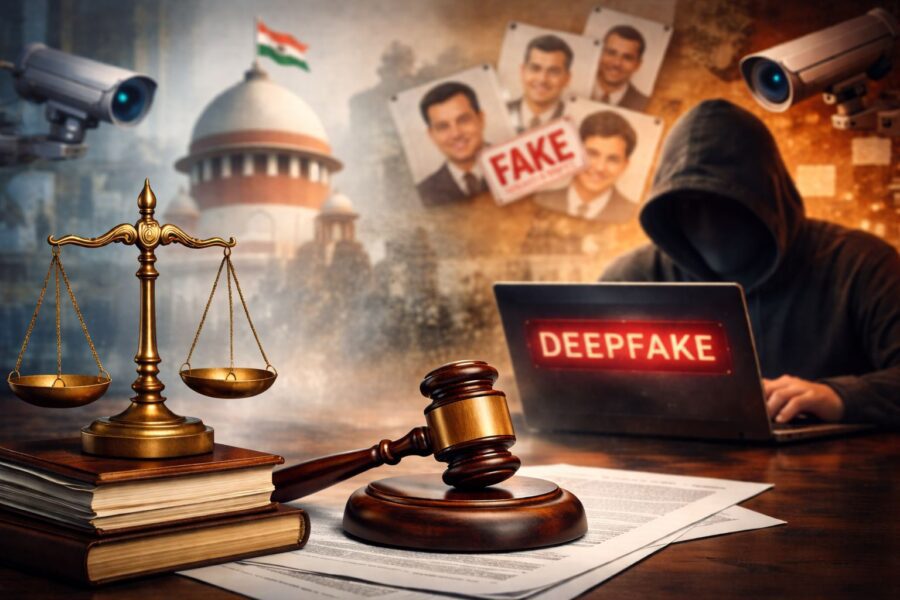
The rapid development of artificial intelligence and digital technologies has transformed various aspects of modern life, including communication, entertainment, and information sharing. However, alongside these advancements, new forms of cybercrime have also emerged. One of the most concerning technological threats in recent years is the rise of deepfake technology. Deep fakes refer to digitally manipulated audio, video, or images created using artificial intelligence to make it appear as though a person has said or done something that they never actually did. While the technology can be used for legitimate purposes such as filmmaking, education, and satire, its misuse has raised serious legal, ethical, and societal concerns. Deep fake crimes have the potential to damage reputations, manipulate public opinion, facilitate fraud, and threaten democratic institutions, making it necessary for legal systems to develop effective regulatory mechanisms.
Deepfake technology is generally created through artificial intelligence techniques such as deep learning and generative adversarial networks (GANs). These systems analyze large amounts of visual and audio data of a particular individual and generate synthetic media that closely resembles the real person. As the technology becomes more sophisticated, it becomes increasingly difficult to distinguish between genuine and fabricated content. This realistic nature of deepfakes makes them a powerful tool for deception and manipulation.
One of the most alarming uses of deepfake technology is in the creation of non-consensual explicit content. Individuals, particularly women, have become victims of deepfake pornography where their faces are superimposed onto explicit material without their consent. Such content spreads rapidly across the internet, causing severe emotional distress, reputational harm, and social stigma to victims. In many cases, victims have little control over the removal of such content once it circulates online. This form of digital exploitation represents a serious violation of privacy and dignity.
Deepfake technology has also been used for financial fraud and identity theft. Criminals may create fake videos or audio clips impersonating corporate executives or government officials to deceive employees or individuals into transferring funds or revealing confidential information. Such fraudulent schemes, sometimes referred to as “deepfake scams,” exploit the trust people place in visual and auditory evidence. As digital communication becomes increasingly common in corporate environments, the risk of such impersonation crimes continues to grow.
Another serious concern related to deepfakes is their potential to spread misinformation and manipulate public opinion. In the context of politics and elections, fabricated videos showing public figures making controversial statements can easily mislead the public and influence democratic processes. The rapid dissemination of such manipulated content through social media platforms can create confusion and distrust among citizens. In extreme cases, deepfake misinformation could provoke social unrest, damage diplomatic relations, or undermine public confidence in institutions.
Deepfakes also pose significant challenges to the criminal justice system. Traditionally, photographs, video recordings, and audio clips have served as reliable forms of evidence in legal proceedings. However, with the increasing prevalence of deepfake technology, the authenticity of digital evidence may come under suspicion. If manipulated content becomes indistinguishable from real recordings, courts may face difficulties in determining the reliability of evidence. This phenomenon has been described as the “liar’s dividend,” where individuals accused of wrongdoing may falsely claim that genuine evidence against them is a deepfake.
In response to these emerging threats, governments and legal institutions around the world are gradually developing regulatory frameworks to address deepfake crimes. In India, although there is currently no specific legislation exclusively dealing with deepfakes, various provisions under existing laws can be applied to prosecute such offenses. The Information Technology Act, 2000 contains provisions related to identity theft, impersonation, and publication of obscene content in electronic form. These provisions can be invoked in cases where deepfake content is used for harassment, fraud, or defamation.
The Indian Penal Code (IPC) also provides certain remedies against deepfake crimes. Sections dealing with defamation, cheating, criminal intimidation, and outraging the modesty of women may be applicable depending on the nature of the offense. For example, the creation and circulation of explicit deepfake content involving women may attract provisions relating to obscenity and harassment. Similarly, the use of deepfake technology to impersonate individuals for financial gain could fall under provisions related to cheating and fraud.
Despite the availability of these legal provisions, experts argue that the existing legal framework may not be sufficient to address the complex challenges posed by deepfake technology. The speed at which such content spreads across digital platforms often makes enforcement difficult. Additionally, identifying the original creator of a deepfake video can be challenging due to the anonymous nature of the internet and the use of encrypted communication channels. Therefore, there is a growing demand for more specific legislation that directly addresses deepfake-related offenses.
Apart from legal reforms, technological solutions are also being explored to combat deepfake crimes. Researchers and technology companies are developing detection tools capable of identifying manipulated media by analyzing subtle inconsistencies in facial movements, lighting patterns, or audio signals. Social media platforms are also implementing policies to detect and remove misleading or manipulated content. However, the effectiveness of such measures depends on continuous technological advancements and cooperation between governments, technology companies, and civil society.
Public awareness is another crucial factor in addressing the risks associated with deepfake technology. Educating individuals about the existence and potential misuse of deepfakes can help them become more cautious while consuming digital content. Media literacy programs can encourage people to verify information before sharing it online and to critically evaluate suspicious content. By promoting responsible digital behavior, society can reduce the impact of misinformation and manipulation.
International cooperation is also essential in tackling deepfake crimes because digital content can easily cross national borders. Criminals operating in one jurisdiction may target victims in another country, creating challenges for law enforcement agencies. Collaborative efforts among governments, international organizations, and technology companies are necessary to develop common standards and enforcement mechanisms to address such transnational cyber threats.
In conclusion, deepfake technology represents both a remarkable technological innovation and a significant legal challenge. While it offers creative possibilities in fields such as entertainment and education, its misuse can lead to serious crimes including harassment, fraud, defamation, and political manipulation. The realistic nature of deepfakes threatens public trust in digital media and complicates the administration of justice. Although existing legal provisions in India provide some remedies, the growing sophistication of deepfake technology calls for more comprehensive legal regulations and stronger enforcement mechanisms. Alongside legal reforms, technological solutions, public awareness, and international cooperation will play a crucial role in combating deepfake crimes. Only through a combined effort can society ensure that technological progress does not come at the cost of individual rights, dignity, and democratic stability.
CONTRIBUTED BY: RIYA