Child Marriage In India
In 2006, India passed the Prohibition of Child Marriage Act to tackle the prevalent social evil in the country. The…
RE-SHAPING CRIMINAL LAW IN INDIA: TOWARDS TIMELINE, DIGITAL EVIDENCE AND VICTIM-CENTRIC JUSTICE
INTRODUCTION Criminal law in India has always seen as the back boon of maintaining order and protecting citizens rights. However,…
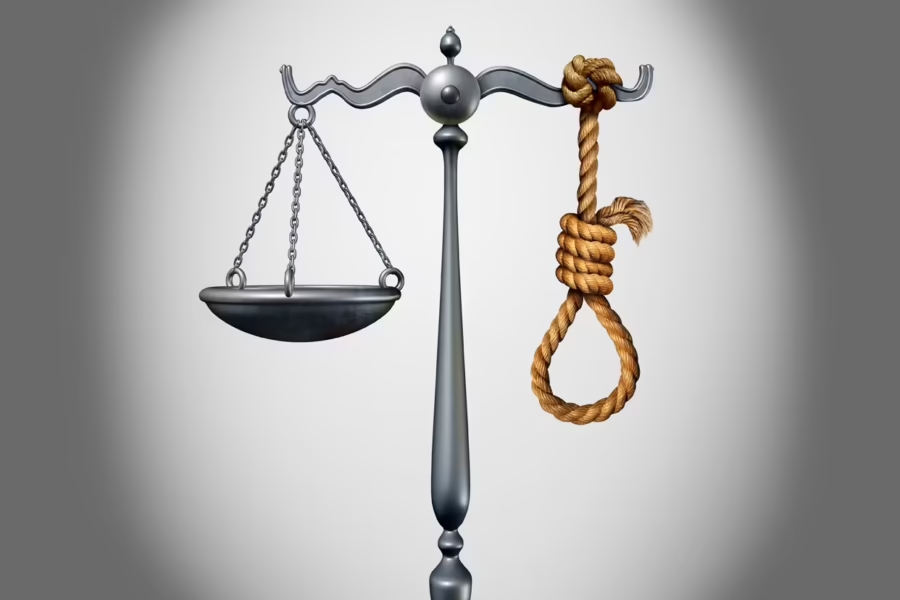
Capital Punishment in India: Law, Practice, and Evolving Jurisprudence
Capital punishment, or the death penalty, remains one of the most debated aspects of criminal jurisprudence, balancing between the demands…
Understanding Bail and Bonds (SECTION 436-450)
INTRODUCTION Bail is neither a punishment nor an acquittal. It is a release of an accused person from legal custody,…
MARITAL RAPE
1. Introduction Marital rape refers to non-consensual sexual intercourse or acts within marriage. Traditionally, many jurisdictions exempted spouses from rape…

Judicial Precedents Shaping Section 126 BNSS (107 CrPC) Interpretation
Introduction Section 107 of the Criminal Procedure Code (CrPC), 1973, remains unchanged and can be traced u/s 126 in the…
The “Rarest of Rare” Doctrine: Relevance in Modern India
Introduction The death penalty has been one of the most debated and controversial aspects of criminal jurisprudence across the globe.…
IS THE JUVENILE JUSTICE SYSTEM EFFECTIVE IN REHABILITATING YOUNG OFFENDERS
The juvenile justice system is a legal structure created particularly to handle cases involving people under a certain age who…
Presumption of Innocence vs. Media Trials: A Delicate Balance
In a democratic society governed by the rule of law, “presumption of innocence” is a cornerstone of criminal jurisprudence. It…