
R v. Ahluwalia: The Vindication of Battered Women
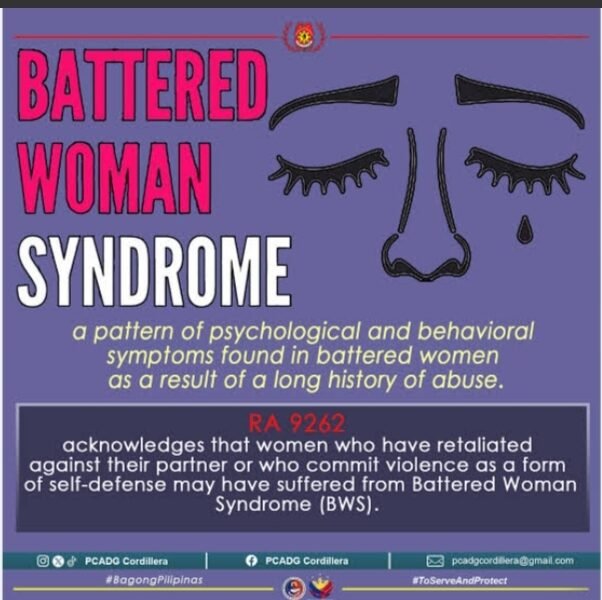
Since men’s violence toward their partners or wives came to public attention as a major social problem in the 1970s, there has been great variation in the way the social science community has responded, both in terms of defining the issues and in formulating appropriate policy and intervention strategies. This has become one of the most controversial topics in the social sciences, as various schools of thought have sought to implement their perspective. This post-structuralist overview of the theoretical literature seeks to present an account of the different discourses at work within the field of domestic assault and men’s violence in the home, to elaborate on the implications of each discourse, and to illuminate the dynamics of conflict and tension that exist within this most controversial area. The cultural constructions and resources being employed within the field are identified and located within the broader cultural heritage of society.The issue of whether provocation can serve as defence in cases of wife battering was recently raised in London, in the case of R v. Kiranjit Ahluwalia. In May 1989, Ahluwalia, who had been a victim of years of continuous abuse and battering, poured a bucket of petrol over her husband, Deepak Ahluwalia, while he was asleep and set him on fire. Deepak Ahluwalia died in hospital ten days later of severe burns. Kiranjit was charged with murder. Kiranjit Ahluwalia was a victim of systematic violence and humiliation during the ten years of her marriage. Her abuse consisted of being beaten if she spoke without her husband’s permission, being hit with his belt, having her hair tom out, her finger broken, being pushed down the stairs, and raped. On the evening of his death he threatened her with more brutalities. Kiranjit had reached the ‘nadir of self abasement’ according to her counsel. She had lost her self -esteem and was prepared to do anything for her husband. At one point she wrote to her husband who was spending three days with his girlfriend that she would promise not to go out, have friends, drink coffee or even laugh if he would consent to stay with her at the original trial, the defence tried to use the argument of provocation to reduce the charge of murder to one of manslaughter, which carries a lesser sentence. The trial court rejected the argument that Kiranjit was provoked into killing her husband. The court thereby refused to expand the definition of provocation. She was prosecuted and convicted for the murder of her husband and sentenced to life imprisonment, the mandatory sentence laid down in the common law in England and in India~ Her case was subsequently taken up by women’s rights campaigners and lawyers who believe that the law discriminates against women and shows little mercy to those who have been the victims of domestic violence. Three months ago the Court of Appeal quashed her murder conviction and ordered a retrial of the case. The Court of Appeal however, firmly refused to redefine the law on provocation to take into account the experiences of battered women. Yet in light of fresh evidence that was submitted to the Court on Kiranjit’s mental health at the time of the death, a retrial was ordered on the grounds that she was suffering from diminished responsibility. The day the new proceedings were to start, the prosecution announced that it was prepared to accept psychiatric reports which said that Kiranjit was suffering from mental illness which impaired her responsibility at the time she set fire to her husband. The judge accepted the plea of manslaughter on the grounds of diminished responsibility, after hearing her evidence about the abuse she had suffered at the hands of her husband. The judge found that she had acted irrationally, overcome by the strain of living with a violent man. Accordingly, he sentenced her to three years and four months in jail, the time she had already served in jail. Her release, after serving three years and four months for killing her husband, represents a landmark decision. The decision not only constitutes a recognition of the experiences of battered women and alters the criminal law, accordingly, it also has significant implications for women in India, whose experiences of abuse are yet to be recognised by the legislature, let alone the courts. The significance of the decision lies in the acceptance of women’s experience of violence in the home and lays the ground for changing the common law position as regards the defence of provocation. It highlights the position of battered wives who kill their husbands not in the fury of a violent quarrel but in the aftermath of an argument. There is thus a delay between the husband’s action and the killing. This has proved crucial to women offering provocation as a defence when charged with murder of a violent husband who has mistreated and abused them for years. Women’s groups and lawyers in England, argued that women who have suffered violent treatment and abuse over a long period of time may react with a ‘slow bum’ rather than a grave and sudden loss of self control that is the classic definition of provocation which is also followed by our courts. Traditionally, if there is a cooling off period between any potentially provocative acts and a subsequent killing, then the defence of provocation will fail. Yet in cases of wife abuse the delay can lead to a boiling over which does not necessarily indicate a deliberate plotting of retribution. A redefinition of provocation is therefore essential to take into account the history of the marriage and the cumulative effects of violence experienced by a woman during the course of her marriage. The story of Kiranjit also provides justification for the recognition of the doctrine of ‘battered woman syndrome.’ Such a doctrine has been recognised by courts in Canada and the United States. There has been an increasing acceptance by courts of expert testimony on ‘battered woman syndrome’.2 ‘Battered woman syndrome’ explains why a battered woman stays in a violent relationship and does not leave; why she does not call the police or get other assistance before killing her batterer; and why she believed that at the time she responded, the danger she faced was imminent, posed a threat to her life, and was therefore different and more serious than other times when she had been beaten, had not acted and had survived.3 The recognition of the doctrine has led to the acceptance of a plea of self-defence which constitutes a complete defence to the charge of murder and if accepted, leads to an acquittal. The reasonableness standard of self-defense has been enlarged so as to recognise that women act in self-defence in different circumstances and in different ways than men 4 In the Supreme Court of Canada case of Lavallee, a 22 year old woman had been repeatedly abused and battered by her common law partner during their four year relationship.5 After a quarrel, her partner threatened to kill her. As he turned to walk out of the room, Lavallee shot him in the back of the head. The shot killed him. Her lawyer argued that she acted in self-defence as she reasonably believed she would be badly injured or killed. The Court allowed the plea of self-defence which was supported by a psychiatric assessment prepared by an expert on the ‘battered woman syndrome’. The expert stated that the shooting was “the final desperate act of a woman who believed that she would be killed that night.” The Court stressed the importance of expert evidence on ‘battered woman syndrome’ in order to destroy some of the myths surrounding the issue of wife abuse.6 For instance, when a woman has been abused or violated, society expects her to pack up her bags and leave. If she doesn’t move out, people believe “she was not as badly beaten as she claims or she would have left the man long ago. Or if she was battered severely, she must have stayed out of some masochistic enjoyment.” Such myths can adversely affect a woman’s claim to have acted in self-defence. It is for the purpose of dispelling these myths that expert evidence about ‘battered woman syndrome’ was admitted by the Court in Lavallee. In the Canadian case, the expert evidence was admitted to illustrate the ways in which battered women become trapped in the abusive relationships. The evidence further illustrated that battered wife syndrome is characterised by the abuser begging forgiveness after the assault and thus boosts up the victim’s fragile ego and her self-esteem. Furthermore, women try to cover up the beatings. All these factors help in appreciating the reasonableness of the victims subjective fear in the context of such relationships. Thus the Court underscored the importance of not judging the situation from a standard of reasonableness derived from a male perspective of reality. It stated clearly that trying to apply the doctrine of self-defence from a male standard was of little use in wife assault cases. The actions of the woman and her reasonable beliefs had to be judged from her situation and experience, including the cumulative effect of years of brutality rs of brutality. Similarly, in the United States expert testimony has been admitted on ‘battered woman syndrome’ to support a claim of self-defence in a number of state appellate and supreme courts.? The courts have come to recognise that the self-defense requirements of reasonableness, imminent danger and equal force are sex biased. Judges have come to recognise that women act in self-defense under different circumstances and in different ways than men; that the law of self defense incorporates sex bias; and that sex stereotypes of women as a group generally and battered or raped women specifically, interfere with determinations of women’s claims of self-defense. The trend of case law in other jurisdictions has significant implications for the law in India. The decisions emphasise how the law is sex-biased and based on male understandings and experiences of the world. Furthermore, they can encourage battered women not to accept abuse as part of the normal ‘wear and tear’ of marriage and help to create awareness about the extent to which abuse is a pervasive social problem. Yet the solution is not to be found in the death of batterers, but in taking the problem of domestic violence seriously and by intervening before the battered woman kills her partner or he kills her. Legislation on the issue of domestic violence coupled with awareness campaigns around the issue of violent crimes in the home are steps in this direction. In India, the legislature has not intervened in any meaningful way to prevent domestic violence and wife battering, nor provide a woman with effective relief in the event of battering. Section 498-A of the Indian Penal Code is the only provision that comes close to recognising the problem of domestic violence in the context of the home.8 Yet, as is evident from the three Supreme Court cases, the provision has been used only in dowry cases and invoked only after the woman has been killed.It has not served to protect the rights of the abused woman, nor to recognise that wife battering is not confined to the context of dowry demands and harassment. We need to understand that women are systematically beaten in their homes by men with whom they are close. The abuse is partly the product of social and cultural portrayals of women as objects. Kiranjit stated that the abuse she and other battered Asian women had suffered had caused them to lose faith in their culture. She added that the essence of her culture, society, and religion had reduced her and others like her to a “plaything – stuck together and broken at will. Everybody did what they wanted with me A review of Supreme Court decisions on murder reveals that most women have been killed by men they are married to (often with the abetment of his relations). The same is not true of murdered men. Given these findings, the continuous defense of the institution of marriage and the family, and the States posture of non-interference in this ‘private’ domain, only serves to reinforce the guilt that keeps women in these vicious, emotionally and physically dangerous situations. Families continuously encourage women back into these situations of violence for the sake of the ‘honour and dignity’ of the family. They are told to stay, to do what he wants and it will get better. Yet this fails to address the violence that men continue to inflict on women, and the fact that most of these men are the ones who play the closest, most intimate, and potentially, most dangerous role in our lives.
Contributed By: Shaan Davesser, Advocate