
I. Background & Facts
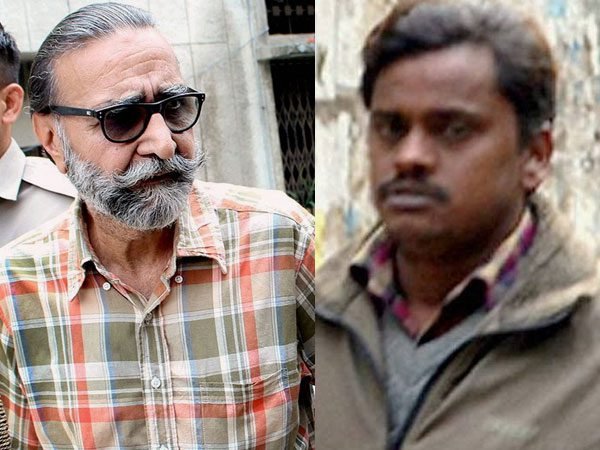
The case arises from the infamous Nithari serial killings (Noida, 2005–2006), where women and children went missing from the Nithari area. Human remains were discovered in December 2006 from an open strip between Houses D5 and D6, Sector 31, Noida, and from a stormwater drain. Surendra Koli, a domestic help employed at D5 (owned by Moninder Singh Pandher), was arrested and tried in thirteen separate criminal cases each based on a common evidentiary foundation:
- A confessional statement recorded under Section 164 CrPC (now 183 BNSS) on 01.03.2007
- Alleged recoveries/discoveries under Section 27, Indian Evidence Act, 1872 (now 23 BSA).
In the Rimpa Haldar case (Sessions Trial No. 611/2007), Koli was convicted under Sections 302, 364, 376, and 201 IPC and sentenced to death by the Trial Court (13.02.2009), affirmed by the Allahabad High Court (11.09.2009) and the Supreme Court (15.02.2011). Review Petition was dismissed on 28.10.2014.
The death sentence was subsequently commuted to life imprisonment by the High Court on 28.01.2015 in writ proceedings.
In the remaining twelve cases, the High Court acquitted Koli on 16.10.2023, discrediting the same confession and Section 27 recoveries. The Supreme Court affirmed those acquittals on 30.07.2025 by dismissing the State’s appeals. This created an irreconcilable conflict: conviction in one case, acquittal in twelve others on identical evidence.
II. Legal Issues
- Whether curative jurisdiction under Rupa Ashok Hurra is invocable after dismissal of review, when irreconcilable outcomes arise on an identical evidentiary record.
- Whether a Section 164 CrPC confession recorded after almost 60 days of uninterrupted police custody, without meaningful legal aid and without unqualified Magistrate satisfaction, is admissible.
- Whether Section 27, Evidence Act discoveries are valid when no contemporaneous disclosure memo exists, and the site was already known to police and public before the accused arrived.
- Whether inconsistent outcomes on the same evidentiary substratum violate Articles 14 and 21 of the Constitution.
- Whether conviction can stand once its two foundational pillars confession and discovery are legally discredited in parallel proceedings by the same Court.
III. Contentions
Petitioner:
- The conviction in the Rimpa Haldar case and the twelve acquittals affirmed by the Supreme Court rest on the same confession and same class of Section 27 material creating an irreconcilable conflict that constitutes a manifest miscarriage of justice.
- The confession was involuntary: recorded after ~60 days of police custody, without real legal aid, with the Investigating Officer present at and after the recording, and with repeated internal references to tutoring and coercion.
- Section 27 recoveries were invalid: no contemporaneous disclosure memo, contradictions between panchnama and remand papers (which showed a joint disclosure), and the fact that excavation had already begun before Koli arrived.
- Forensic evidence at D5 yielded no human bloodstains, tissue, or remains consistent with multiple homicides DNA only identified victims, not authorship.
- Allowing the conviction to stand violates Article 14 (like cases must be treated alike) and Article 21 (fair procedure is mandatory, especially in capital cases).
State:
- Finality of the 2011 judgment and the 2014 review dismissal should be respected.
- The Rimpa Haldar case had specific corroborating evidence including DNA, identification of clothing by relatives, and testimony of PW-27 and PW-28 (modus operandi witnesses).
- Curative jurisdiction is extremely narrow and this amounts to a second review.
IV. Judgment & Reasoning
The Supreme Court allowed the curative petition and acquitted Koli, reasoning as follows:
On Curative Jurisdiction: The petition was not a second review or a re-appreciation of evidence. The fundamental defect was structural two final orders of the Supreme Court yielding irreconcilable outcomes on an identical evidentiary foundation. This engages the court’s constitutional duty to avert manifest injustice ex debito justitiae (as a matter of right, not discretion).
On the Confession (Section 164 CrPC / Section 24, Evidence Act): The statement was recorded after approximately sixty days of uninterrupted police custody without meaningful legal aid. The Magistrate did not record the clear, unqualified satisfaction of voluntariness required by statute. The Investigating Officer was present at the commencement of the recording and remained available immediately outside. The text of the statement itself referred to tutoring and prior coercion. These features attracted the bar under Section 24, Evidence Act the confession was inadmissible as a matter of law. No principled basis existed to treat it as voluntary in this case when it had been judicially discredited in all twelve companion cases on the same grounds.
On Discoveries (Section 27, Evidence Act): No contemporaneous disclosure memo was proved. Remand papers recorded a joint disclosure by both accused, contradicting the prosecution’s later version that Koli alone led to discovery. The site (an open strip and public drain) was already known to police and public, and excavation had commenced before Koli arrived negating the essential statutory element of “discovery by the accused.” These findings, upheld by the Court on 30.07.2025 in the State’s appeals, applied with equal force to the present case.
On Forensics: DNA evidence established identity of victims not authorship of homicide. Extensive searches of D5 yielded no human bloodstains or remains consistent with multiple killings inside. Knives and axes bore no blood, tissue or matching forensic markers. No expert chain of custody was established. These gaps were equally present in this case.
On Articles 14 and 21: Allowing a conviction to stand on evidence this Court had rejected as involuntary and inadmissible in the same fact-matrix violated Article 21’s guarantee of fair procedure at its acutest where capital punishment was involved.
It equally violated Article 14, since like cases must be treated alike and arbitrary disparity in outcomes on an identical record is antithetical to equality before law.
V. Critical Analysis
Significance: This is a landmark exercise of curative jurisdiction rare in criminal matters and rarer still in a capital case that had already survived review. The Court correctly identified that the defect was not factual but structural and juridical: the same evidentiary pillars (confession + Section 27 discoveries) cannot be simultaneously reliable in one case and legally tainted in twelve others. The judgment reinforces that the curative power under Rupa Ashok Hurra is not confined to natural justice violations or bias it extends to cases where irreconcilable outcomes on identical facts would undermine the integrity of the adjudicatory process itself.
On Evidentiary Law: The judgment is a strong restatement of the strict standards for Section 164 confessions and Section 27 discoveries. It confirms that prolonged pre-confession custody, absence of genuine legal aid, and investigator proximity to the recording are not technical irregularities they go to the root of admissibility under Section 24, Evidence Act. On Section 27, the Court reinforces that the discovery must be by the accused, meaning prior knowledge of the site by police or public defeats admissibility entirely.
On Constitutional Guarantees: The invocation of Articles 14 and 21 together is significant. The Court elevated consistency of outcome on identical evidence to a constitutional requirement not merely a judicial preference. This has implications beyond curative petitions: it signals that arbitrary divergence in legally indistinguishable cases is itself a constitutional wrong.
Limitation Acknowledged: The Court candidly noted that the investigation was botched the scene was not secured, material leads (including an organ-trade angle flagged by a government committee) were not pursued, and scientific opportunities were lost. While acquitting Koli, the Court observed with regret that the identity of the actual perpetrator was never legally established underscoring the cost of investigative negligence to victims’ families and to justice.
Contributed by Aasish Pandey, Associate
Law Offices of Kr. Vivek Tanwar