
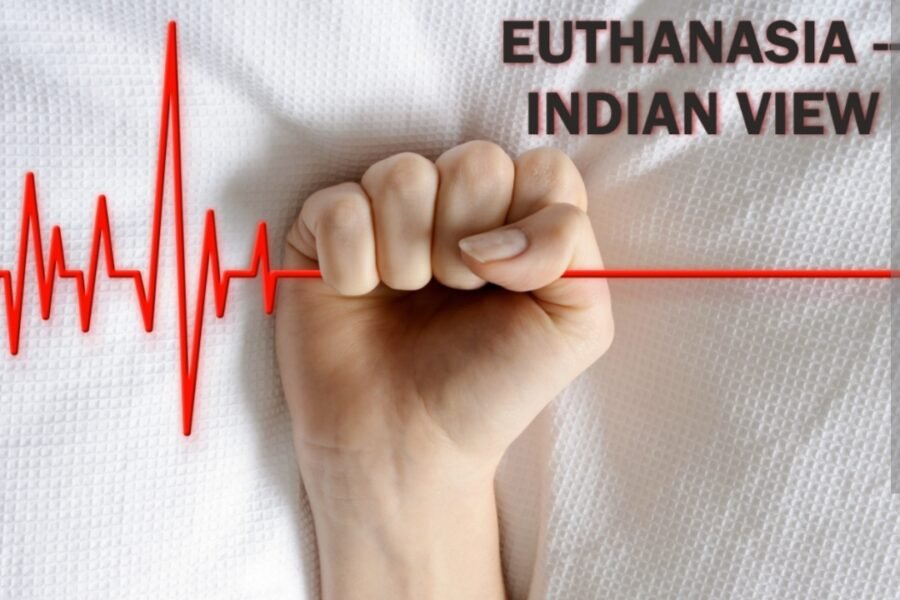
In a landmark ruling on March 11, 2026, the Supreme Court of India authorised the withdrawal of life-sustaining medical treatment—including clinically assisted nutrition and hydration (CANH)—for 32-year-old Harish Rana, who has been in a persistent vegetative state (PVS) for more than 13 years. The decision, delivered by a bench of Justices J.B. Pardiwala and K.V. Viswanathan, marks the first time the court has applied its own 2018 guidelines on passive euthanasia in a live case, turning a constitutional principle into practical reality.
Harish Rana, a former B.Tech student, suffered severe traumatic brain injury with diffuse axonal injury after falling from the fourth floor of his paying-guest accommodation in Chandigarh in August 2013. He has remained bedridden, unresponsive, and completely dependent on medical support ever since—requiring a tracheostomy, urinary catheter, and CANH delivered through a percutaneous endoscopic gastrostomy (PEG) tube. Medical boards constituted by the court confirmed irreversible brain damage, negligible prospects of recovery, and 100% permanent disability. His parents and family, after years of dedicated caregiving with no improvement, approached the court seeking to allow nature to take its course, citing prolonged suffering and loss of dignity.
From Legal Principle to Practical Application
The ruling builds directly on the Supreme Court’s 2018 Constitution Bench judgment in Common Cause v. Union of India, which recognised the “right to die with dignity” as an integral part of the right to life under Article 21 of the Constitution. That verdict legalised passive euthanasia (withholding or withdrawing life-sustaining treatment) for terminally ill or PVS patients and introduced Advance Medical Directives (living wills). A 2023 clarification simplified procedural hurdles, such as attestation requirements. However, until now, no court had actually permitted the process in a contested case.
The Harish Rana judgment addresses a critical grey area: non-voluntary passive euthanasia for incompetent patients who cannot express their wishes. The court unanimously held that continuing CANH was not in Rana’s “best interest.” It clarified that CANH—administered via surgical PEG tube with clinical protocols, risk monitoring, and periodic review—is a form of medical treatment, not basic nursing care. Withdrawing it does not “cause” death but merely allows the natural progression of the underlying condition.
Justice Pardiwala’s detailed opinion drew on international precedents from the UK (Airedale NHS Trust v. Bland), the US, Australia, and others to elaborate the “best interest” principle. This holistic test weighs medical futility (no hope of recovery or meaningful quality of life), burdens of treatment (pain, indignity, repeated infections), and non-medical factors such as the patient’s pre-injury values and family consensus. The court emphasised that dignity is not lost in death; prolonging biological existence through futile intervention can itself violate Article 21.
Notably, the judgment declared the term “passive euthanasia” obsolete and potentially confusing. Henceforth, it should be referred to as “withdrawing or withholding of medical treatment.” Active euthanasia—any positive act to cause death—remains impermissible without legislation.
Key Directions and Streamlining of Guidelines
In a compassionate and pragmatic move, the bench waived the standard 30-day reconsideration period because all stakeholders—medical boards, family, and doctors—were unanimous. It directed the All India Institute of Medical Sciences (AIIMS), New Delhi, to admit Rana to its palliative care department and implement the withdrawal through a tailored end-of-life care plan that ensures comfort, symptom management, and dignity. The court also issued broader directions to streamline the 2018 Common Cause guidelines, addressing practical gaps such as doctor hesitation, home-based patients, and quicker constitution of secondary medical boards by Chief Medical Officers.
Significance and the Road Ahead
This verdict is being hailed as a compassionate milestone that bridges the gap between legal recognition and real-world application. Medical and legal experts have welcomed it for reducing uncertainty for families and doctors facing similar heart-wrenching decisions. It reinforces that the right to a dignified death includes quality palliative care and prevents the indignity of prolonged, futile medical intervention.
India still lacks comprehensive legislation on end-of-life care despite recommendations from the 196th Law Commission Report. The judgment once again underscores the urgent need for a statute that codifies these guidelines, protects medical professionals acting in good faith, and expands access to palliative care nationwide.
For the Rana family, the ruling brings closure after more than a decade of anguish. For the country, it sets a precedent that future cases of PVS or terminal illness can be resolved with greater clarity, empathy, and speed—always placing the patient’s dignity and best interest at the centre. As Justice Pardiwala observed, dignity remains “the most sacred possession of a human being” even in the face of death.
By: Adv. Akshat Jain