
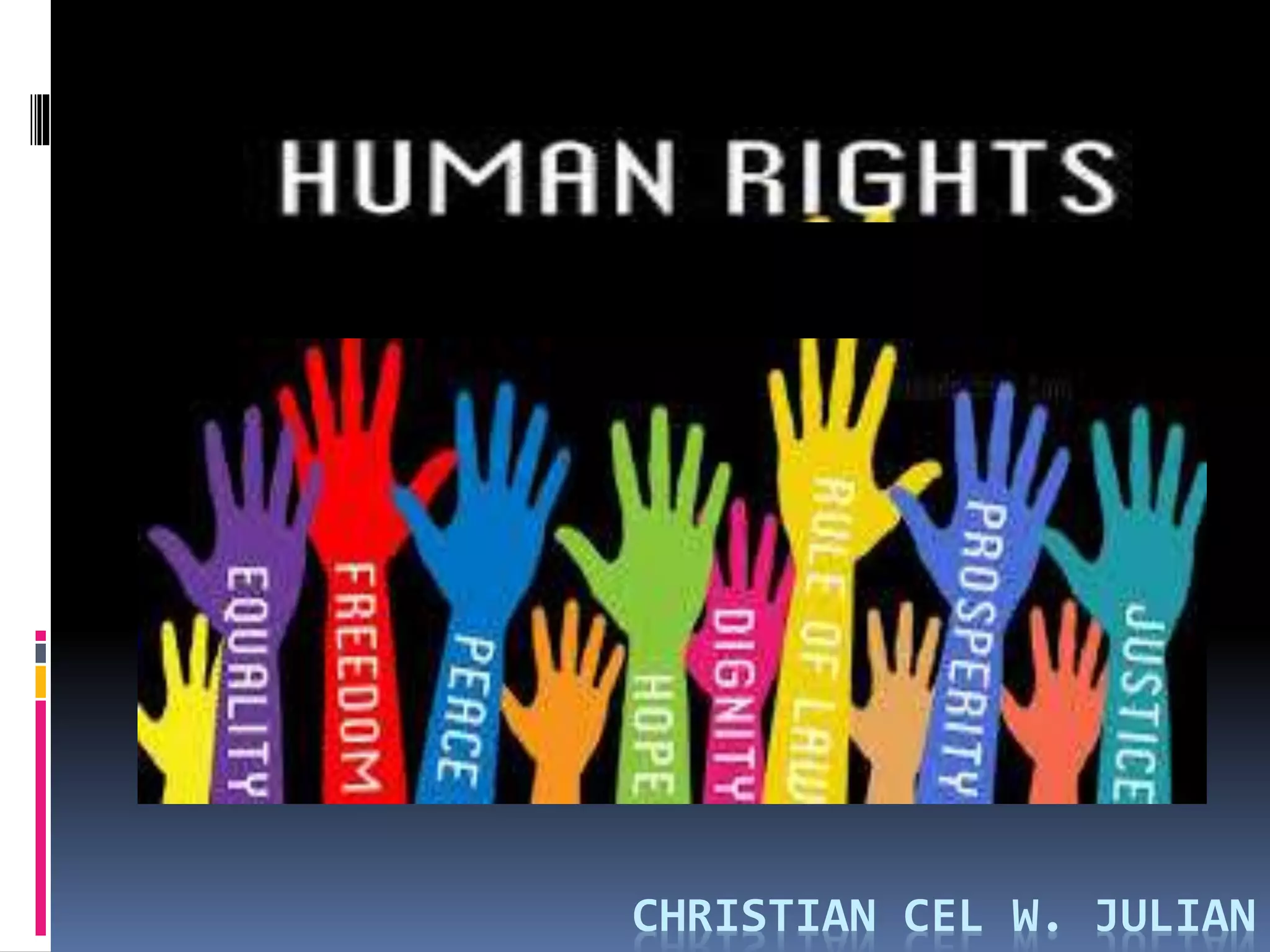
Human rights are the basic rights and freedoms that belong to every person simply because they are human. These rights are inherent, universal, and inalienable, meaning they cannot be taken away except in exceptional circumstances and apply to every individual regardless of nationality, race, religion, gender, language, or social status. The idea of human rights is deeply connected with the concept of human dignity, ensuring that every individual is treated with respect, fairness, and equality. In modern democratic societies, human rights form the cornerstone of justice, freedom, and peace.
The concept of human rights is not entirely new. Throughout history, societies have attempted to define the rights and duties of individuals. Early documents such as the Magna Carta of 1215, the English Bill of Rights of 1689, and the Declaration of the Rights of Man and of the Citizen (1789) in France played an important role in shaping the development of rights and liberties. However, the modern international human rights movement emerged after the devastation of the Second World War. The horrific atrocities committed during the war made the global community realize the urgent need for a universal framework to protect individuals from abuse and oppression.
In 1948, the United Nations adopted the Universal Declaration of Human Rights (UDHR), which became the most significant milestone in the development of international human rights law. The declaration outlines fundamental rights such as the right to life, liberty, equality before the law, freedom of expression, freedom of religion, and the right to education and work. Although the UDHR itself is not legally binding, it has inspired numerous international treaties, national constitutions, and laws that protect human rights across the world.
Human rights are generally classified into three broad categories: civil and political rights, economic and social rights, and collective rights. Civil and political rights include the right to life, freedom from torture, freedom of speech, freedom of religion, and the right to a fair trial. These rights protect individuals from arbitrary actions by the state and ensure participation in public life. Economic and social rights focus on ensuring a decent standard of living and include rights such as the right to work, the right to health, the right to education, and the right to social security. Collective rights, often referred to as third-generation rights, include the right to development, the right to a clean environment, and the right to peace.
In the Indian context, human rights are strongly embedded in the Constitution of India. The fundamental rights enshrined in Part III of the Constitution guarantee several essential freedoms such as equality before the law, freedom of speech and expression, protection against discrimination, and the right to life and personal liberty. The Indian judiciary, particularly the Supreme Court, has played a crucial role in expanding the scope of these rights through judicial interpretation. For instance, the Supreme Court has interpreted the right to life under Article 21 to include the right to a clean environment, the right to livelihood, the right to privacy, and the right to live with dignity.
The Protection of Human Rights Act, 1993, further strengthened the human rights framework in India by establishing the National Human Rights Commission (NHRC) and State Human Rights Commissions. These bodies are responsible for investigating complaints of human rights violations, promoting awareness, and recommending measures to protect and safeguard human rights. Over the years, these institutions have played an important role in addressing issues such as custodial violence, bonded labor, discrimination, and violations of the rights of marginalized communities.
Despite the existence of legal frameworks and international agreements, the protection of human rights remains a major challenge in many parts of the world. Issues such as poverty, discrimination, gender inequality, human trafficking, and restrictions on freedom of expression continue to threaten human rights. In many societies, vulnerable groups including women, children, minorities, migrants, and persons with disabilities often face systematic discrimination and abuse. Technological advancements have also created new challenges, such as concerns about privacy, surveillance, and misuse of personal data.
One of the most important aspects of human rights is the idea that rights are accompanied by responsibilities. While individuals are entitled to enjoy their rights, they must also respect the rights of others. Governments have a duty to protect and promote human rights through laws, policies, and institutions. At the same time, civil society organizations, activists, and ordinary citizens play a significant role in raising awareness, advocating for justice, and holding authorities accountable.
Education and awareness are crucial in strengthening the culture of human rights. When people understand their rights and responsibilities, they are better equipped to challenge injustice and demand accountability. Schools, universities, and media platforms play an important role in spreading awareness about human rights values such as equality, tolerance, and respect for diversity. Promoting these values helps build a society where individuals coexist peacefully and conflicts are resolved through dialogue and understanding rather than violence.
Human rights also have a strong connection with democracy and the rule of law. In democratic societies, governments are expected to function transparently and remain accountable to the people. The rule of law ensures that laws are applied equally and that no one is above the law. Independent courts, free media, and active civil societies act as safeguards against the misuse of power and protect individuals from arbitrary actions by the state.
In conclusion, human rights are essential for ensuring dignity, freedom, and justice in society. They provide a moral and legal framework that guides governments and individuals in their actions. While significant progress has been made in recognizing and protecting human rights, many challenges still remain. Continuous efforts are required from governments, institutions, and individuals to promote awareness, strengthen legal protections, and ensure that these rights are respected in practice. Ultimately, the true measure of a society lies in how well it protects the rights and dignity of its people, especially the most vulnerable members. Human rights are not merely legal concepts; they represent the fundamental values that uphold humanity itself.
Contributed By: Gaurav Yadav (Legal Intern)